Moving policy forward: Alumna’s legislative victory ensures prosthetic access for every Georgian
By Al Weston
W hen Georgia College & State University alumna Cristalei Polk (‘16) walks into the Georgia State Capitol, she isn’t just representing her profession. She’s representing her patients.
A licensed and certified prosthetist-orthotist practicing in Atlanta, Polk helps patients regain mobility after amputation or injury. She fabricates and fits prosthetic and orthotic devices, and provides ongoing care.
Over time, Polk noticed a recurring obstacle no amount of clinical skill could overcome: Insurance coverage limitations that prevent patients from accessing the devices they need to live their lives to the fullest.
“Most people don’t realize that insurance often only covers one prosthetic device every three to five years,” Polk said. “That doesn’t account for changes in activity level, safety needs or daily life.”
From Curiosity to Calling
Polk’s path to prosthetics began long before her advocacy work. She remembers watching the Paralympics and being captivated by athletes running on prosthetic blades.
“I was fascinated by the technology and what it made possible,” she said.
When Polk arrived at Georgia College, that curiosity turned into action. She sought hands-on opportunities with undergraduate research, working closely with Dr. Hauke Busch, professor of physics, who recalls Polk as a being a standout student.
“I knew Cristalei from early on — she was very committed, very early into the program,” Busch said. “She went through a very meticulous training process with me. She picked up complex skills quickly and had no problem with any of the material.”
Polk took advanced electronics courses, engineering classes such as statics and dynamics, and participated in undergraduate research that required building devices from scratch using machine shop tools, electronics fabrication and optical systems.
Her senior year, Busch tailored a research project to align with Polk’s interest in prosthetics. The project focused on an augmented prosthetic hand, requiring students to design and build the hand itself, develop control systems and write software needed to operate it.
“We built everything ourselves,” Busch said. “The hand, the electronics, the controls. Cristalei did very well with it. Those kinds of projects teach you how to think, how to problem-solve and how to build something real.”
Polk also balanced her academic workload with athletics, competing as a standout scholar-athlete in Bobcat women’s tennis. Polk tallied near 100 career wins, despite only playing in three seasons as she graduated a semester early.
A path from the lab to patient advocacy
After graduating in December 2016, Polk went on to earn a master’s degree in Prosthetics and Orthotics from the University of Texas Southwestern, completing two required residencies — one in orthotics and one in prosthetics — before returning to Georgia to practice.
As Polk built relationships with patients, she also learned the complexities of insurance policies and systemic barriers to care, lessons that echoed what she had seen firsthand in the lab and clinic.
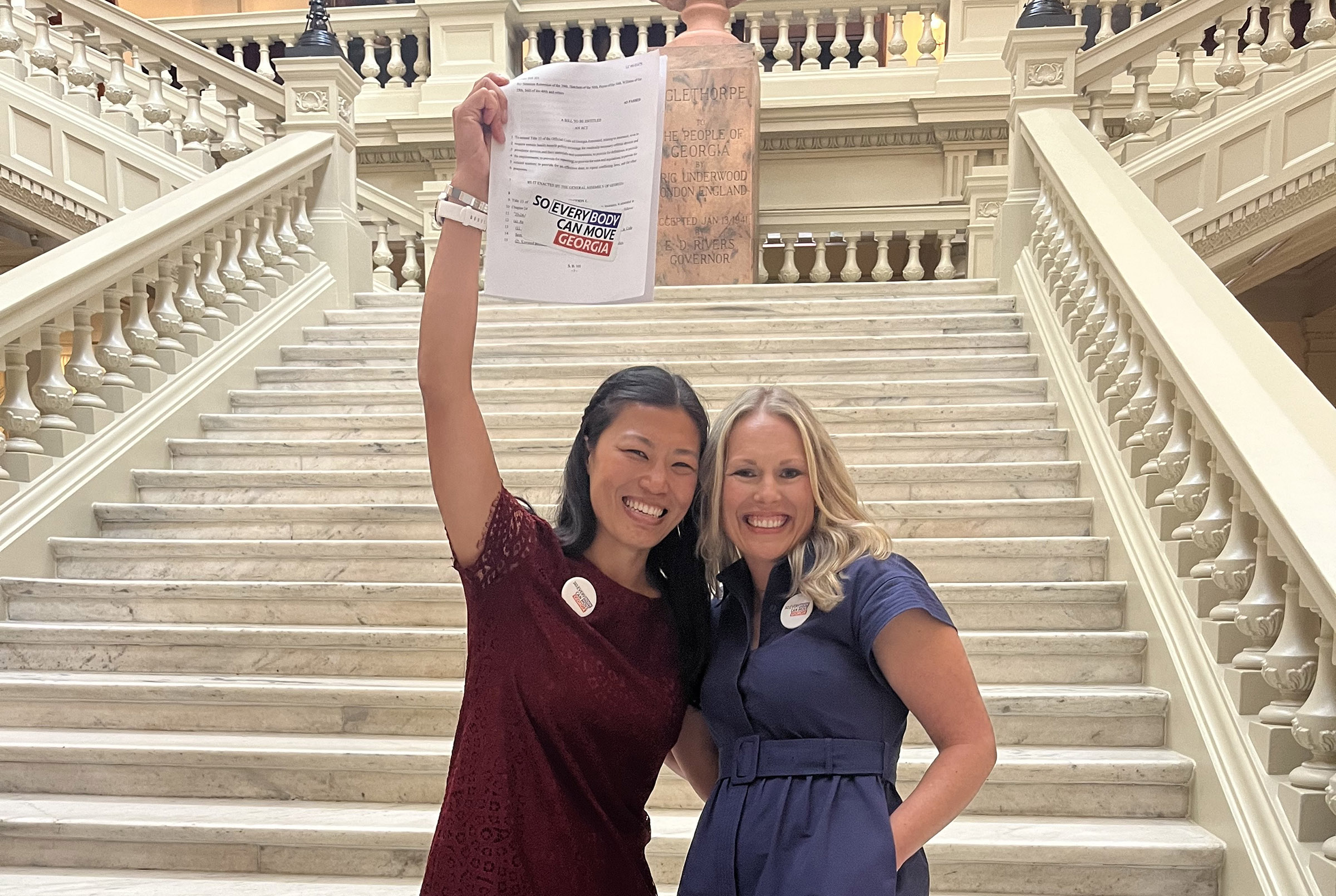
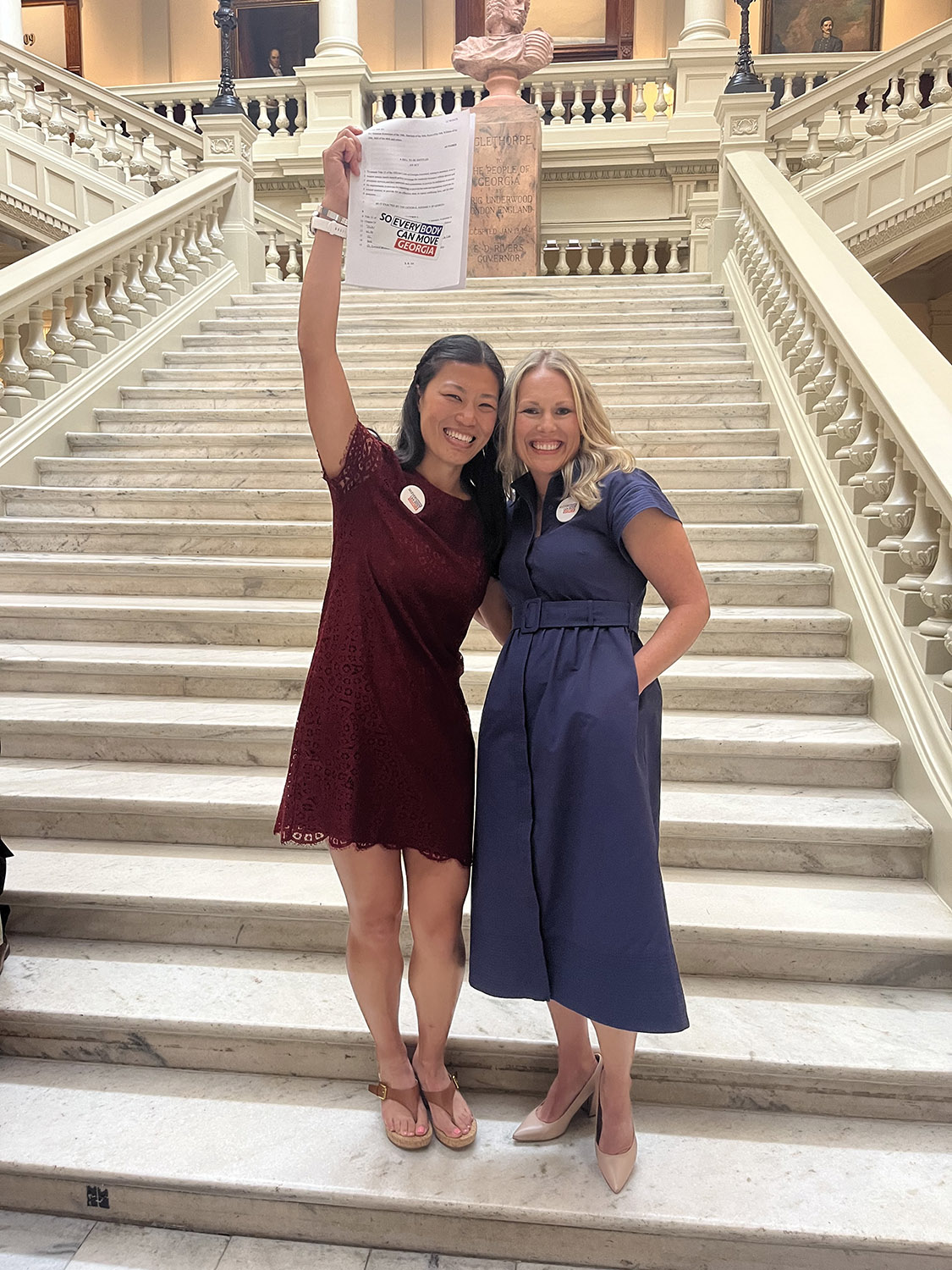
Those experiences laid the groundwork for her involvement with So EveryBODY Can Move, a national movement advocating for improved prosthetic and orthotic coverage. In October 2023, Polk co-led the formation of So EveryBODY Can Move Georgia.
Georgia College taught me how to walk into situations with confidence and a learning mindset. Building relationships was a big part of that — and it mattered every step of the way.
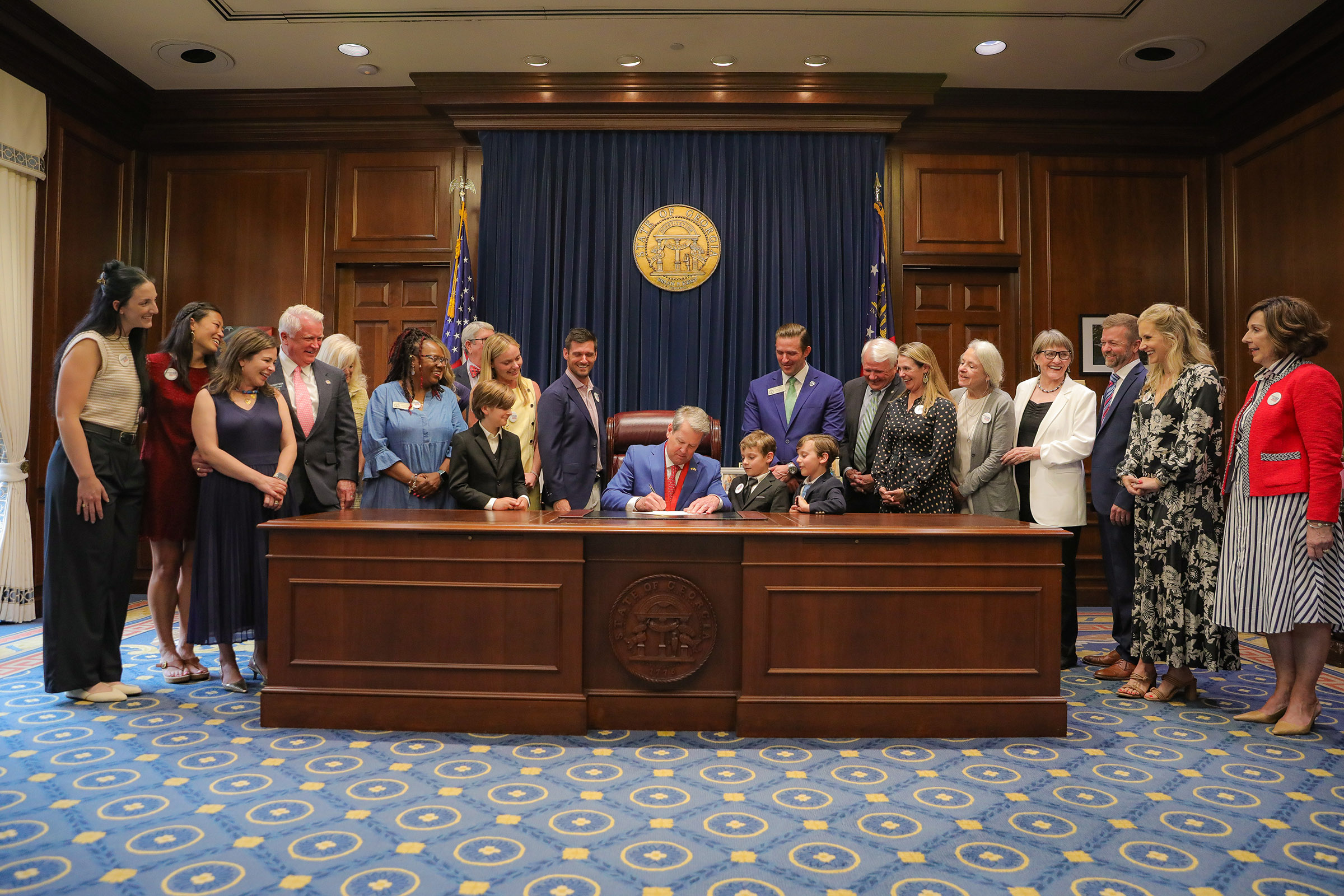
Polk and her colleagues organized patient advocates, attended adaptive sports events, raised funds, educated lawmakers and worked closely with a professional lobbyist. Their efforts culminated in the passage of House Bill 87 (Senate Bill 101) requiring insurance providers to cover secondary, activity-specific prosthetic or orthotic devices, as well as essential devices like shower prostheses.
The bill marked a major step forward for individuals with limb loss or limb difference across Georgia.
“There were moments when the process felt overwhelming,” Polk said. “Learning how politics works, navigating the legislative system — it was all new. But we kept coming back to our ‘why.’ We were doing this for patients.”
Polk credits her time at Georgia College with preparing her for leadership in unfamiliar territory.
“Georgia College taught me how to walk into situations with confidence and a learning mindset,” she said. “Building relationships was a big part of that — and it mattered every step of the way.”
The Work Continues
While the passage of Senate Bill 101 is a milestone worth celebrating, Polk is quick to point out that the advocacy work is ongoing. House Bill 951 has been introduced by Rep. David Clark in the 2026 session to expand the bill to include the State Health Benefit Plan, extending access to even more Georgians.
“We’re definitely not done,” Polk said. “This is about continuing to educate, continuing to advocate and making sure more people have access to the devices they need to move.”