GCSU Doctoral program helps feed the nursing educator pipeline
By Gil Pound
W ith one of the only Doctor of Nursing Practice programs in Georgia that caters to nursing educators as well as clinicians, Georgia College & State University is playing an important role in solving the state’s nursing shortage.
According to a 2024-25 report by the American Association of Colleges of Nursing, U.S. nursing schools had to turn away over 80,000 qualified applicants due to issues like insufficient faculty and classroom space. Most nursing schools say faculty shortages are a top reason for not accepting all qualified applicants into their programs. Fewer nurse educators means fewer nurses.
“There is a national and state deficit of nursing faculty on top of a national deficit of nurses,” said Dr. Sandra Copeland, interim DNP coordinator in the Georgia College School of Nursing. “What they’ve found is the average age of nursing faculty is right there at retirement age. So in addition to there being a faculty shortage, many are close to retiring. Academia has to get more educators in to meet student demand.”
Copeland added that accreditation requirements are moving towards nurse educators needing to have a terminal degree.
GCSU offers pathways for both Bachelor of Science in Nursing and Master of Science in Nursing degree holders to obtain their DNP. Two current Georgia College nursing faculty members are on the MSN to DNP track. Melanie Hammond, a simulation education specialist at GCSU’s nationally-accredited Simulation and Translational Research Center, and Denise Cochran, a lecturer in the School of Nursing, both expect to complete their DNP requirements this spring and will continue educating future nurses.
“A lot of other DNP programs in Georgia only cater towards clinicians and don’t allow educators to complete the program, but Georgia College’s DNP program supports students with a master’s in nursing education as well as a nurse practitioner clinical master’s degree,” said Hammond, who’s on the road to becoming a triple Bobcat.
What differentiates those who wish to work in a clinical setting from those in education is the scholarly project they choose in order to complete their doctorate.
A lot of other DNP programs in Georgia only cater towards clinicians and don’t allow educators to complete the program, but Georgia College’s DNP program supports students with a master’s in nursing education as well as a nurse practitioner clinical master’s degree.
"The program's structure progressively develops a deep understanding of how to build your project, how to put it into practice, and how it may apply to other situations,” said Cochran.
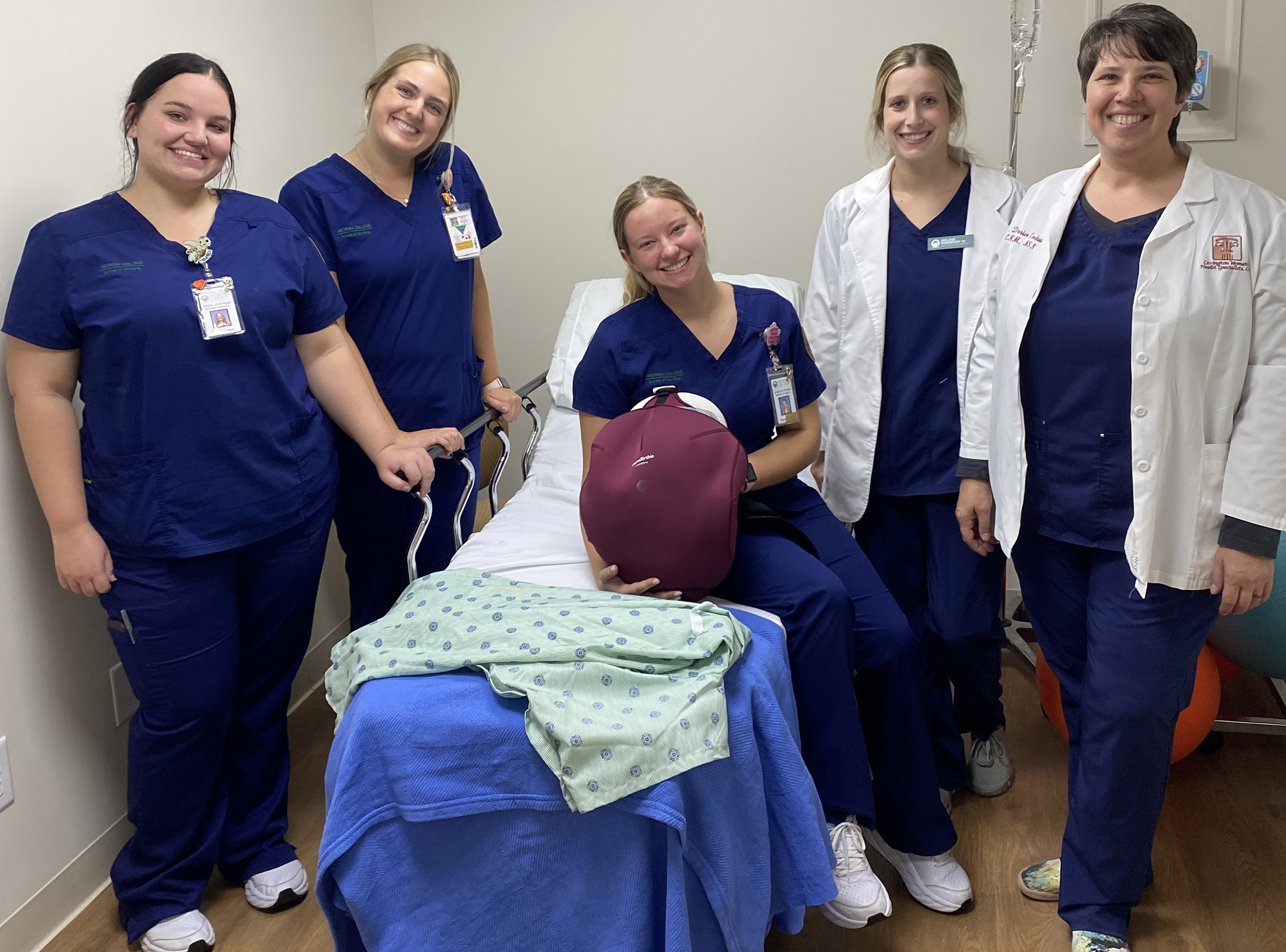
Hammond and Cochran have combined their backgrounds in simulation education and nurse midwifery to build a labor support simulation for undergraduate nursing students who may not have an opportunity during their clinical rotations to aid a patient giving birth.
“We took an existing simulation from the National League of Nursing and modified it to make it specific to our undergraduate family nursing course,” said Cochran, who has delivered nearly 1,900 babies as a certified nurse midwife.
“Students don’t feel comfortable providing labor support because they’ve never done it before,” Hammond said. “They think it’s a very scary, high-stress situation, when in reality, we’re trying to show them that it’s a normal process.”
Presenting to their peers
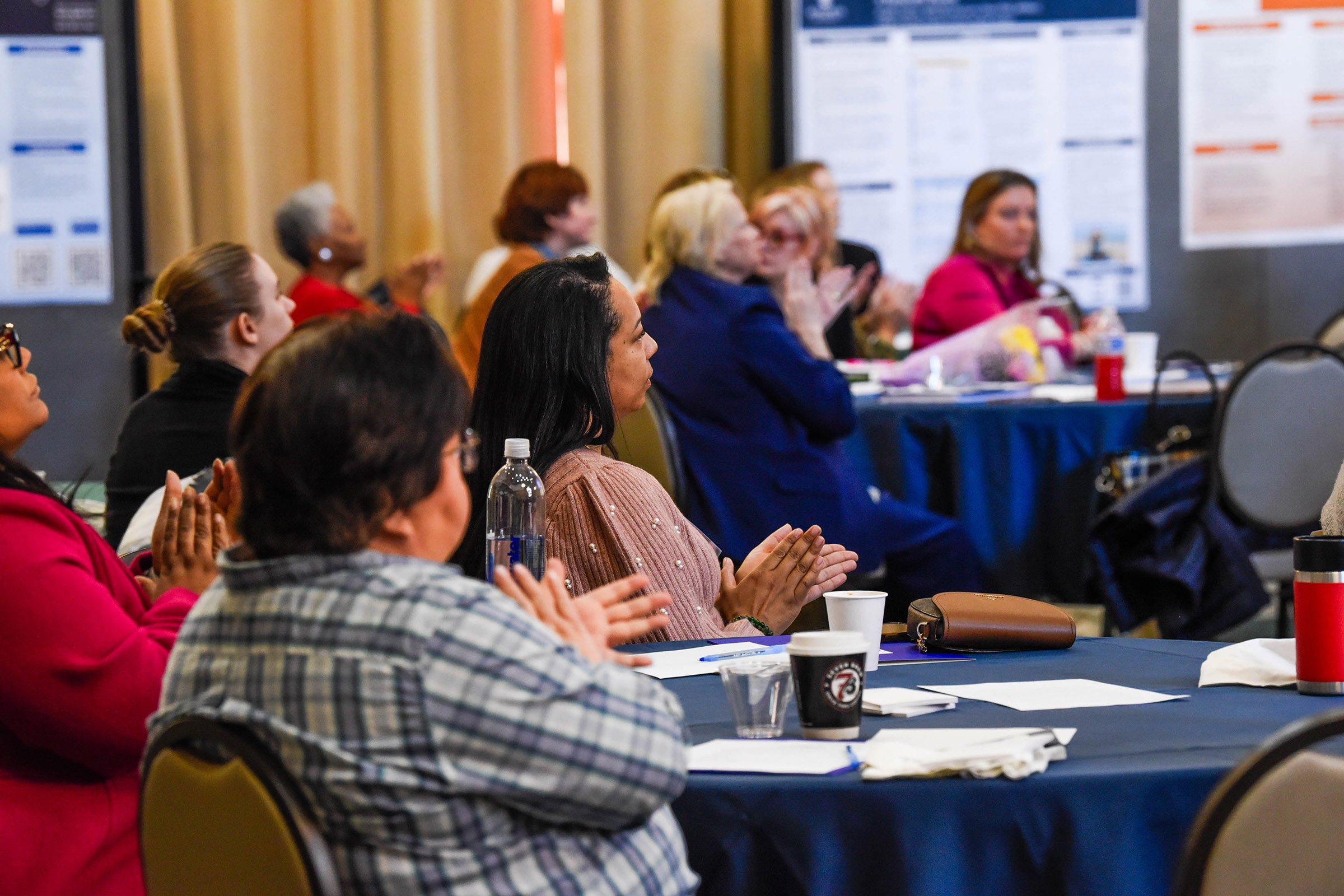
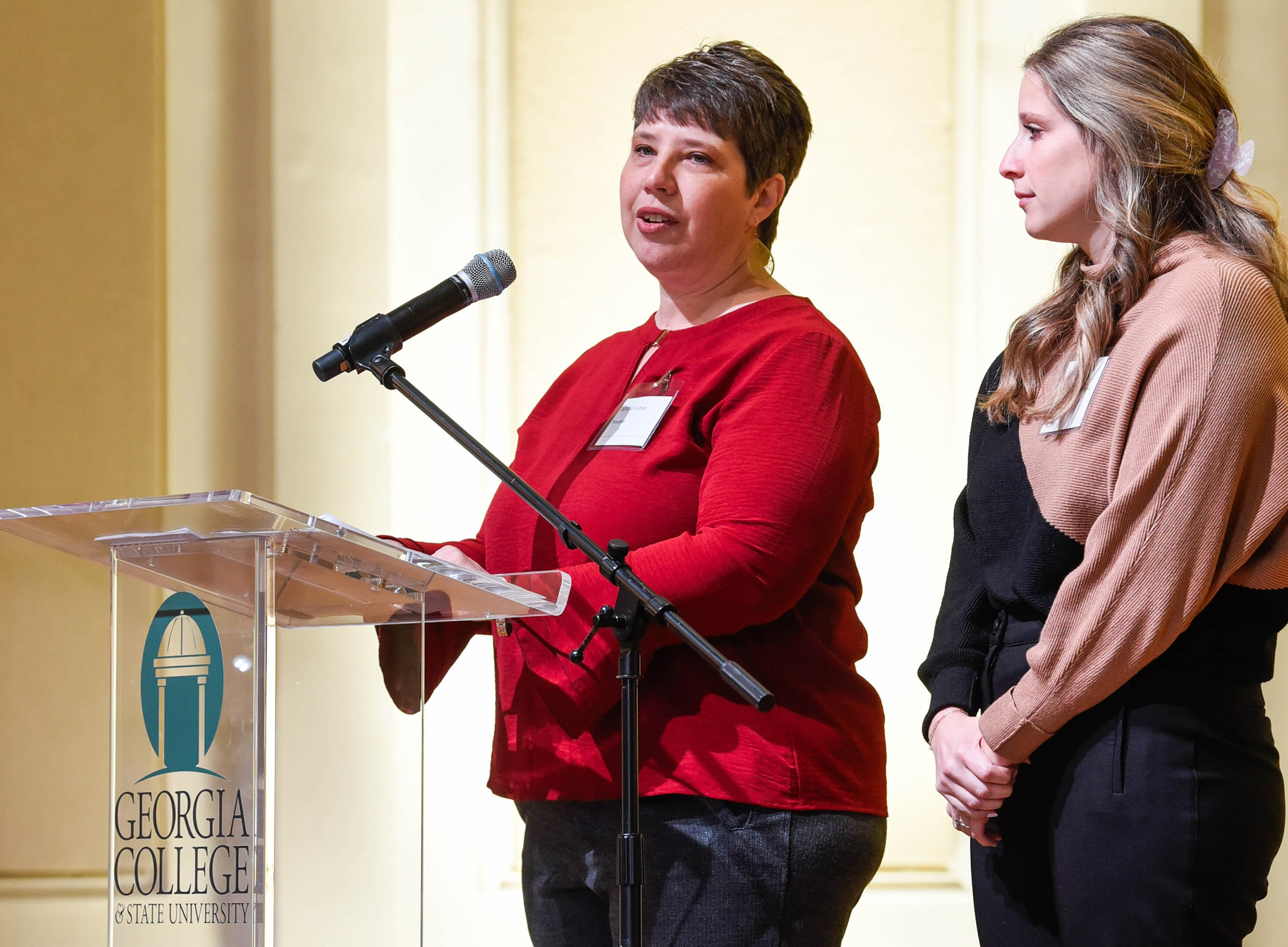
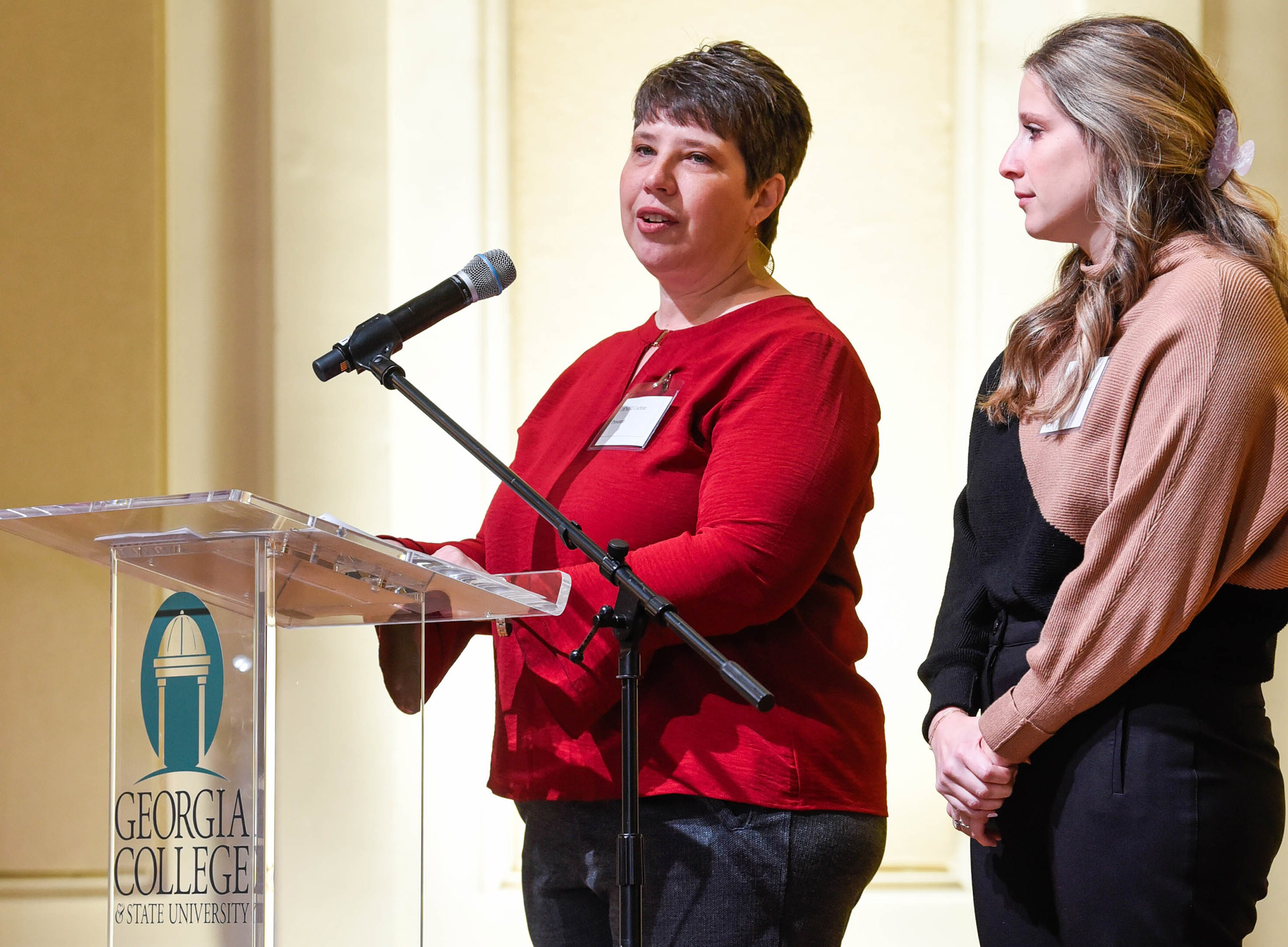
The duo presented their project at the 2026 Georgia Nursing Leadership Coalition Doctoral Symposium held Feb. 7 at Georgia College. Open to the entire nursing community, the annual symposium gives DNP students an opportunity to share their doctoral projects through podium or poster presentations.
“The benefits to the nursing community are to absorb the most recent research findings and apply them in their practices so we can improve health outcomes,” said Dr. Catherine Fowler, GCSU associate professor of nursing and this year’s GNLC program chair.
Some 70 nursing educators, students and professionals attended the Feb. 7 event to hear the latest research. Georgia College Nurse Midwifery coordinator Dr. Monica Ketchie provided the keynote address titled, “Evidence over Emotion: Applying Updated Clinical Guidelines in Women’s Health,” while Family Nurse Practitioner interim coordinator Dr. Amelia Malcolm gave the endnote address on “Telehealth and Chronic Care Management in the Post Covid Era.”
Header Images: Georgia College faculty and Doctor of Nursing Practice students Denise Cochran (left) and Melanie Hammond presented at the Georgia Nursing Leadership Coalition Doctoral Symposium held Feb. 7 at GCSU. (Symposium photos by Janelle Tyler) Cochran and Hammond with nursing students at the GCSU Sim Center. (Photo: Denise Cochran)