Student research funded by national TriBeta biological honor society
By Ian Wesselhoff
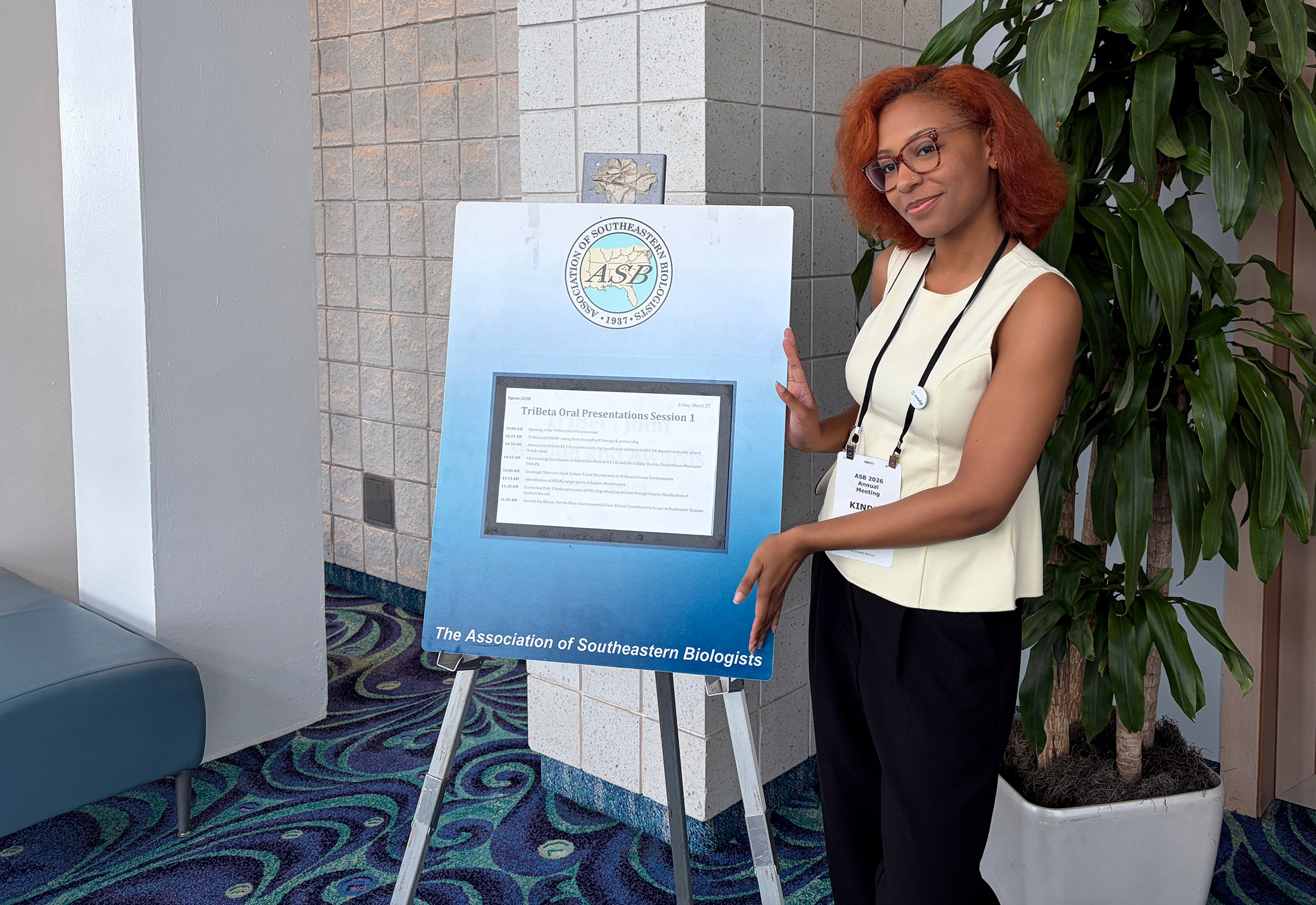
S ix students from Georgia College & State University received research funding from Beta Beta Beta (TriBeta), the national biological honor society, to pursue numerous undergraduate projects. All six students to apply earned the funding, and four of them presented March 25-28 at the 87th annual meeting of the Association of Southeastern Biologists in Mobile, Alabama.
The biology students – Sarah Carter, Elizabeth Campher, Kindle Reeves, Dale Fulcher, Odeya Atar and Lizeth Luquin – are all members of GCSU’s Kappa Gamma chapter of TriBeta. They will also present their research at GCSU’s annual Research Day on April 15, and some will travel for other national and regional conventions.
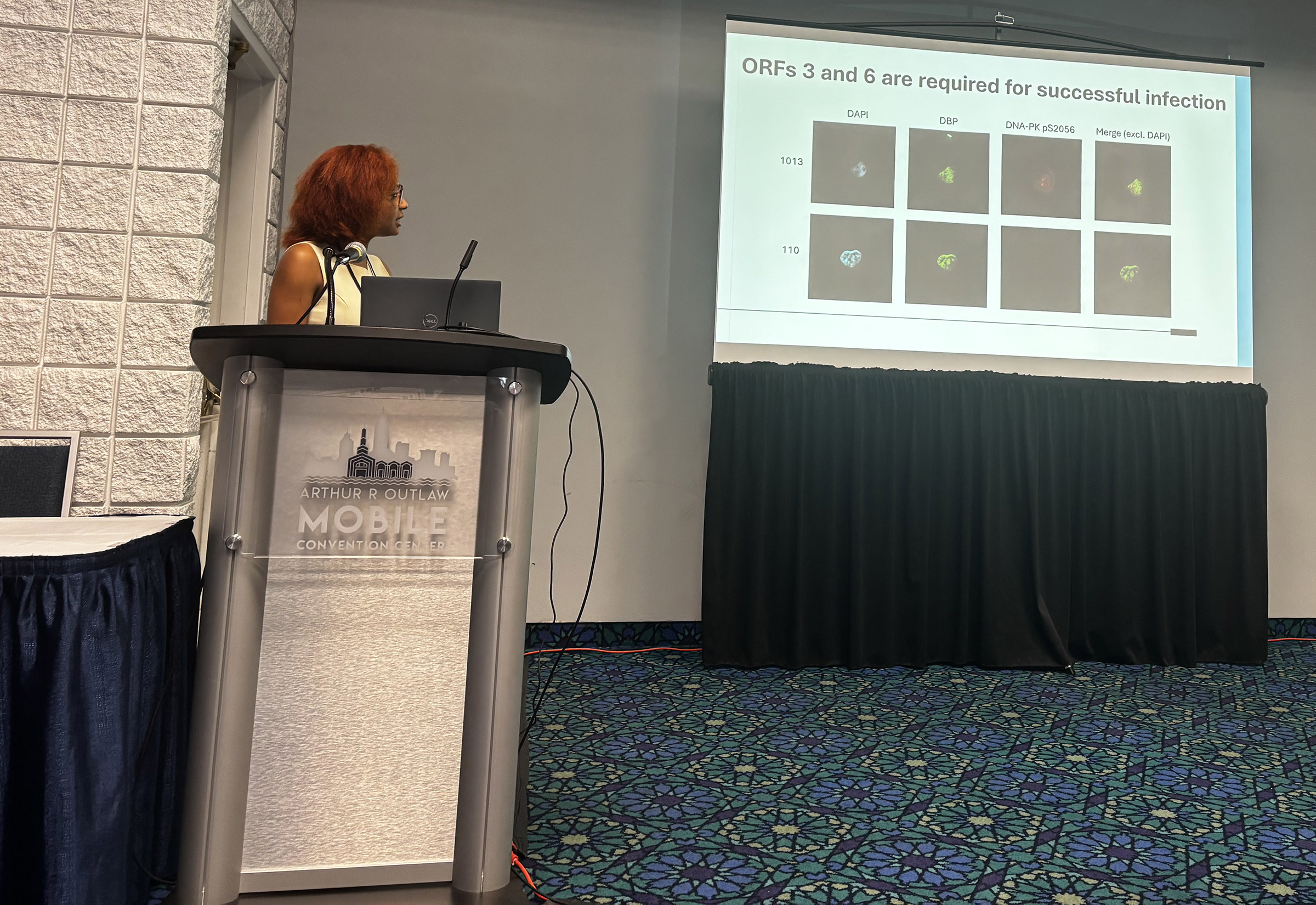
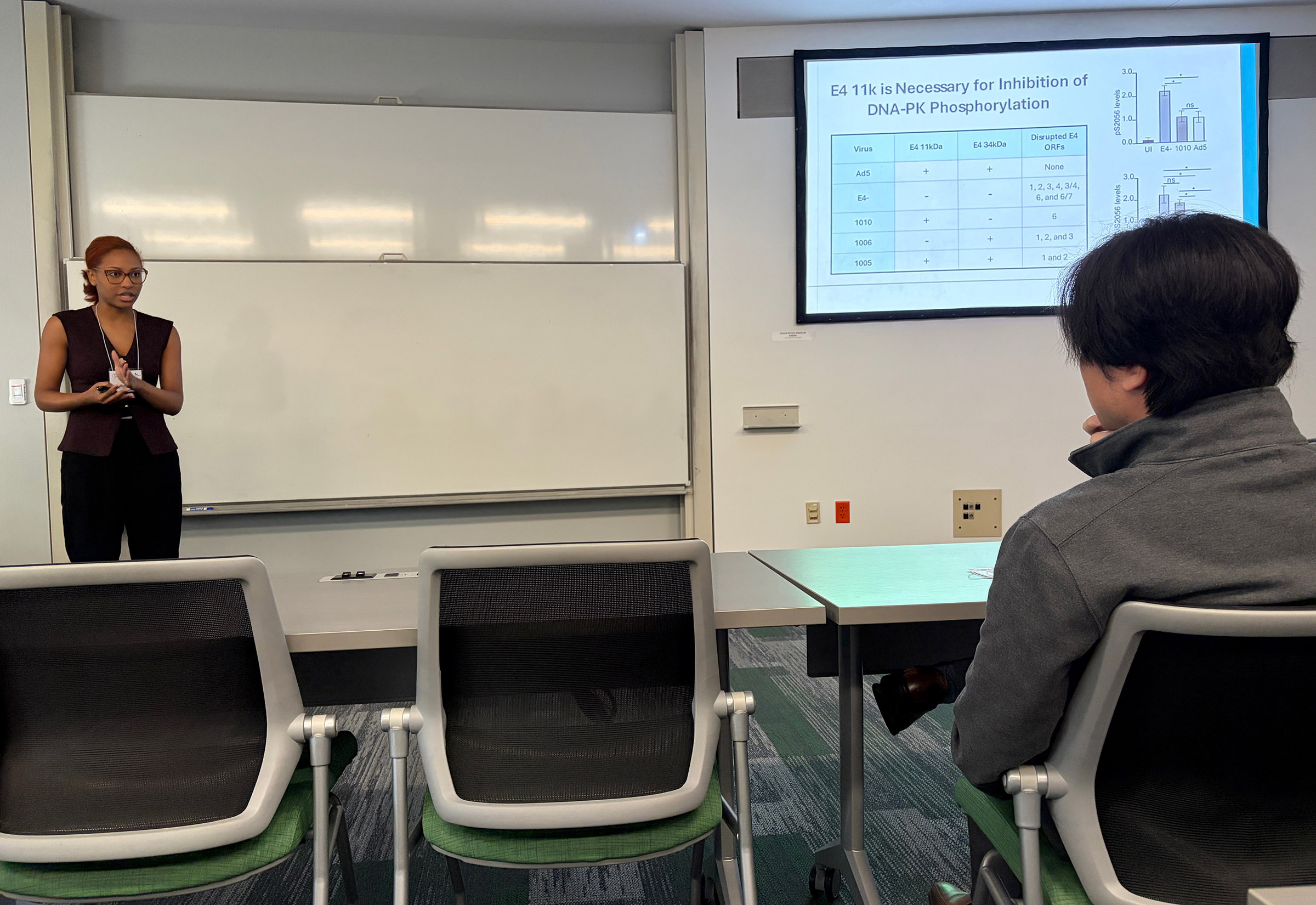
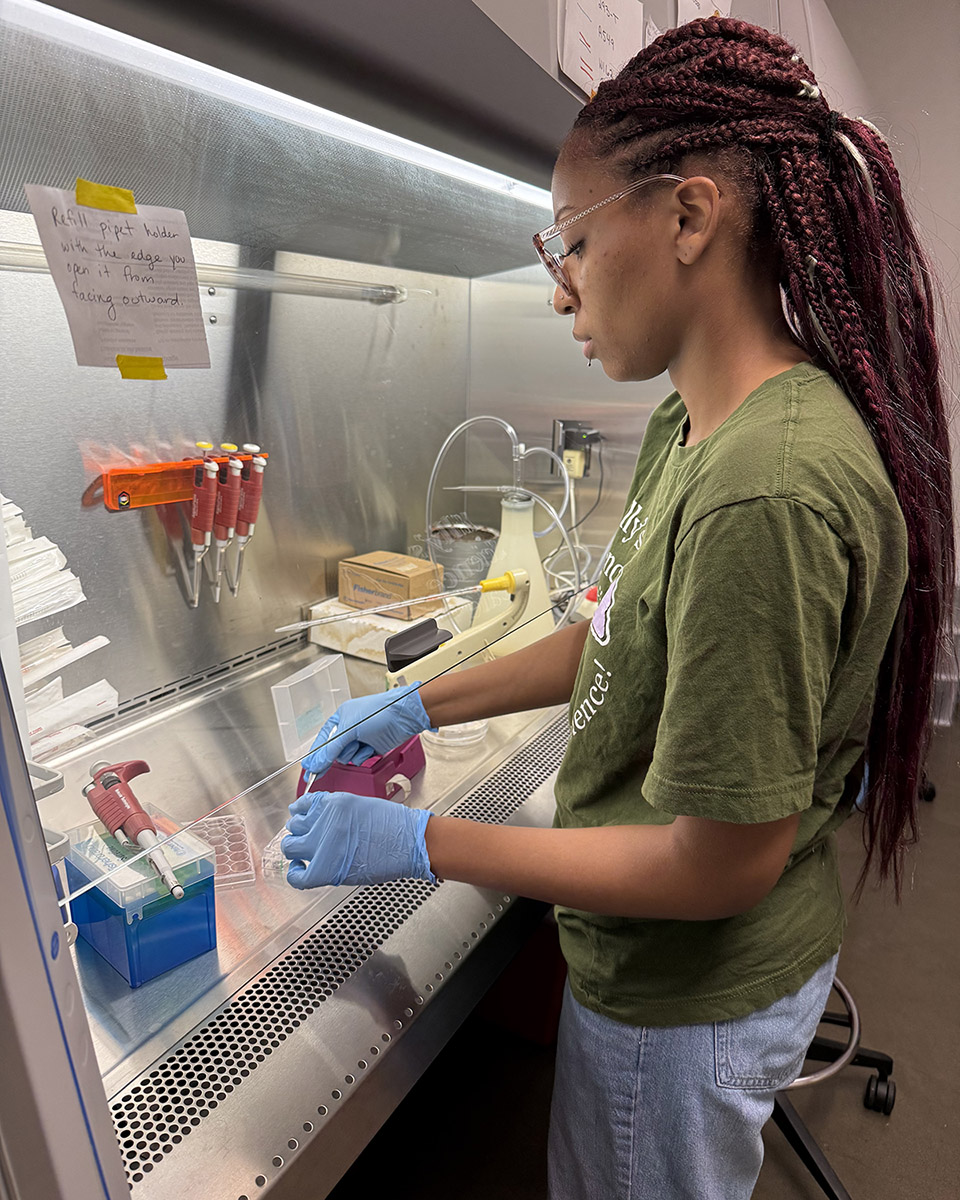
Reeves, a senior, is researching the way a certain gene region in adenovirus interacts with the cell that it infects. When adenovirus infects a cell, the viral DNA could be recognized by our DNA repair proteins, which would prevent the virus from replicating itself. To avoid this, the virus has its own viral proteins that inhibit the repair process. Reeves is focused on examining if this gene region of the virus, E4 11k, can relocate some of those antiviral repair proteins so that the virus can replicate more effectively.
The project has direct implications for how different cancers are treated. Cancer cells often over-express DNA-PK, a DNA repair protein, and E4 11k may be able to inhibit it and prevent the cancer cells from repairing themselves after radiotherapy.
“So, then you could use viral vectors or mutants of this specific virus and have more targeted cancer treatments for cells that are overproliferative and have a higher activation of the protein that we’re looking at,” Reeves said.
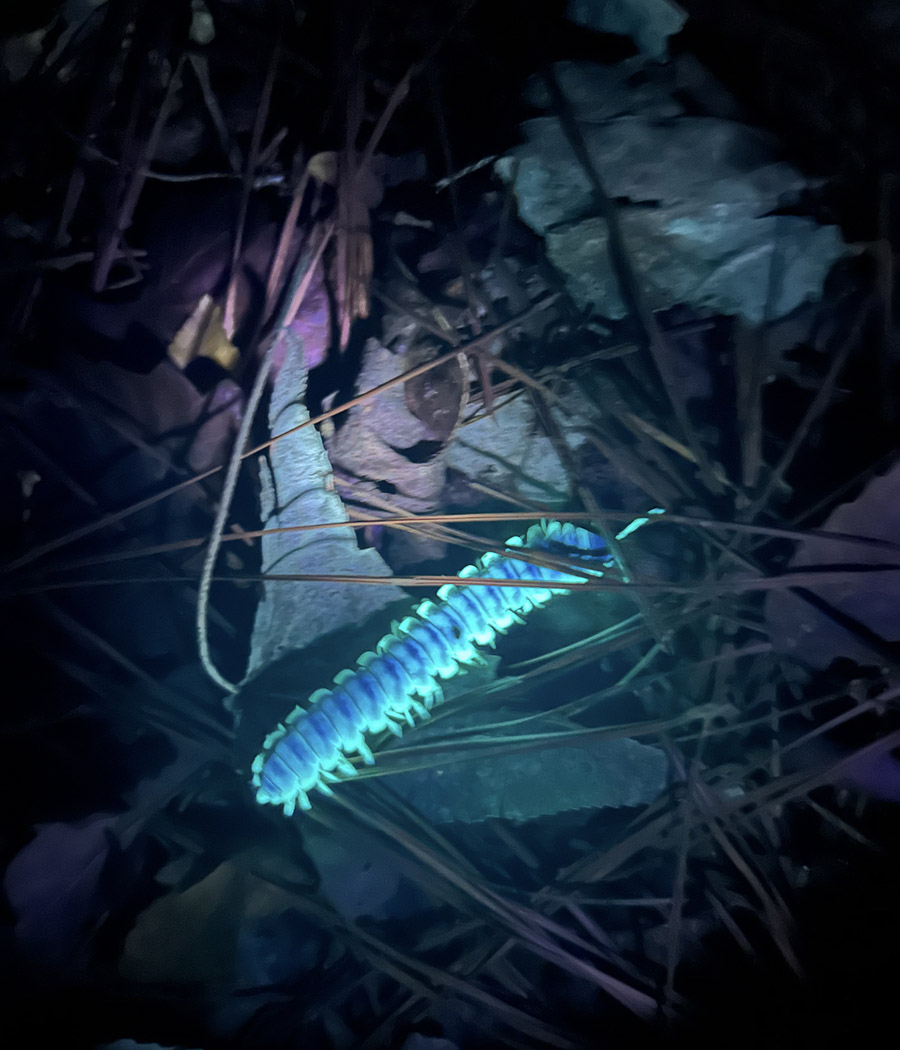
Carter’s project is centered around biofluorescence in millipedes, which emit a visible glow under UV light.
“That has not really been investigated at all, the biochemistry of that pathway,” said Carter, a junior. “We know what the pigment is that’s producing the light, but we don’t know how that pigment is produced, so that’s what we’re looking into … If we can do RNA sequencing in the tissue of where all the enzymes are that are synthesizing the pigment, then that will tell us the whole biochemical pathway.”
Doubling down on undergraduate research
The grant money, originally anywhere from $550 to $750 per student, took care of some supply needs, but Dr. Kevin Bucholtz, associate provost for student engagement and academic excellence, also matched TriBeta’s funding for each student. As a scientist himself, he understands the impact that Georgia College’s MURACE program can have on our students.
“For a student participating in undergraduate research here at Georgia College, they are getting to participate hands-on with faculty as the primary researchers on novel contributions to the discipline,” Bucholtz said. “They are the key drivers in advancing the research forward. They’re doing graduate-level projects at the undergraduate level.”
To apply for the TriBeta funding, students were responsible for writing their own detailed grant proposals, budgeting for the necessary materials and stating the purpose and methodology of their planned research.
“That process of applying for funding is another learning piece that these students are getting because they’re directly working with the faculty mentors,” Bucholtz said. “The faculty members are providing them opportunities to get in the lab early, to work on cutting-edge projects, to be intimately involved in the projects.”
More than two-thirds of Georgia College graduates conduct mentored undergraduate research during their time on campus – some as early as their freshman year.
For a student participating in undergraduate research here at Georgia College, they are getting to participate hands-on with faculty as the primary researchers on novel contributions to the discipline.
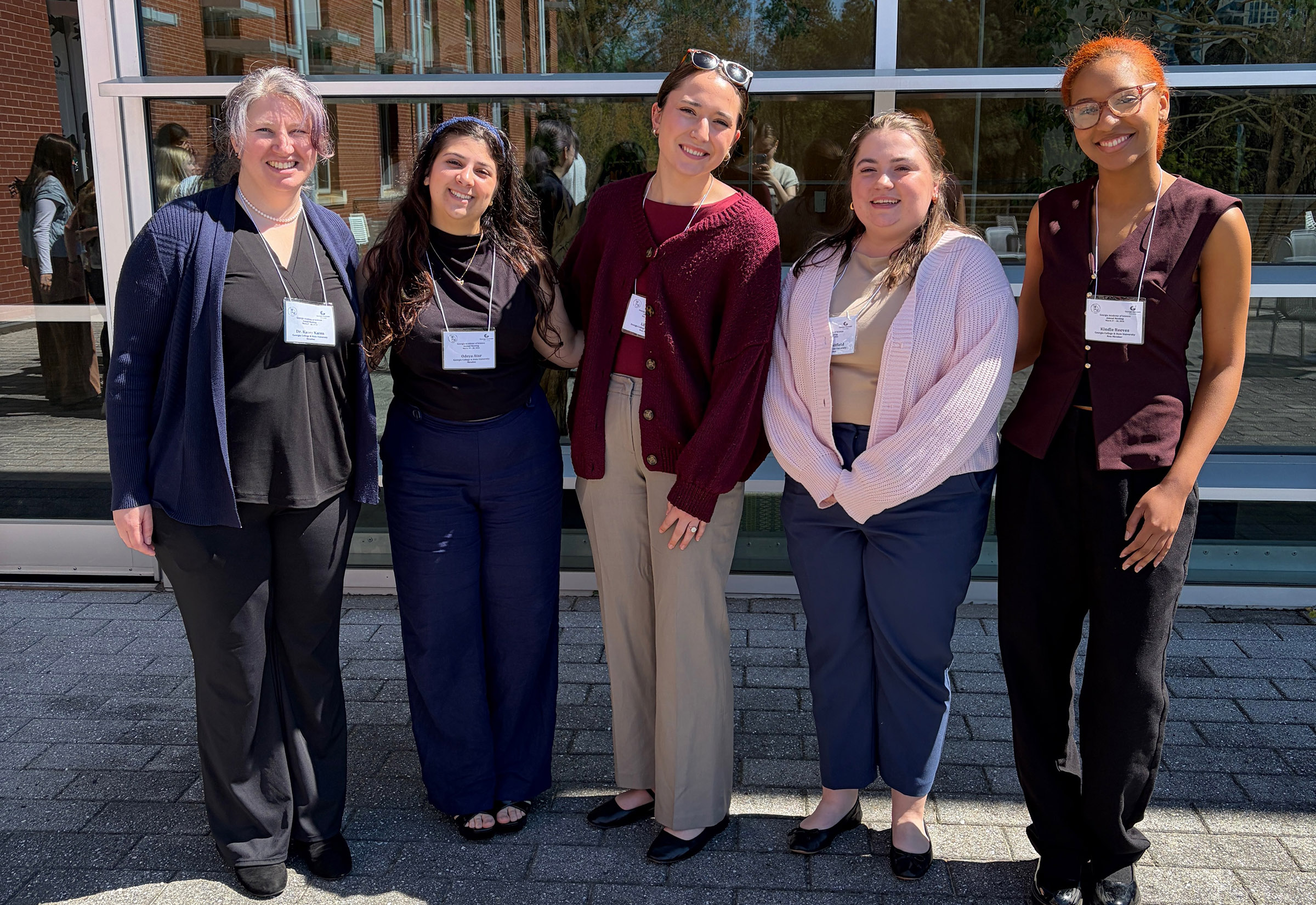
Dr. Kasey Karen, professor of biology, runs the Kappa Gamma chapter of TriBeta, which has been on campus at Georgia College since 1966, and she is the faculty mentor for four of the recipient student biologists. For the last three years, students in her lab have been applying for TriBeta grants, and all eight of their applications over that time have been successful.
“I think getting a building like the Kenneth S. Saladin Integrated Science Complex and having the support from internal grants helps us to establish these labs. Then, we can get external funding, and it just goes further because we have the infrastructure, so the types of research projects that they’re doing are just a lot better than you would see from other smaller liberal arts colleges,” Karen said. “More and more faculty, I’m hoping, will start applying for these kinds of grants.”
Header Images: Students who received TriBeta funding have presented their original research at conferences for the Georgia Academy of Science (GAS) and the Association of Southeastern Biologists (ASB). All six students will present at GCSU's annual Research Day on April 15. Photos by Kindle Reeves.