GCSU students transform into scholars for another record-breaking Research Day
By Gil Pound
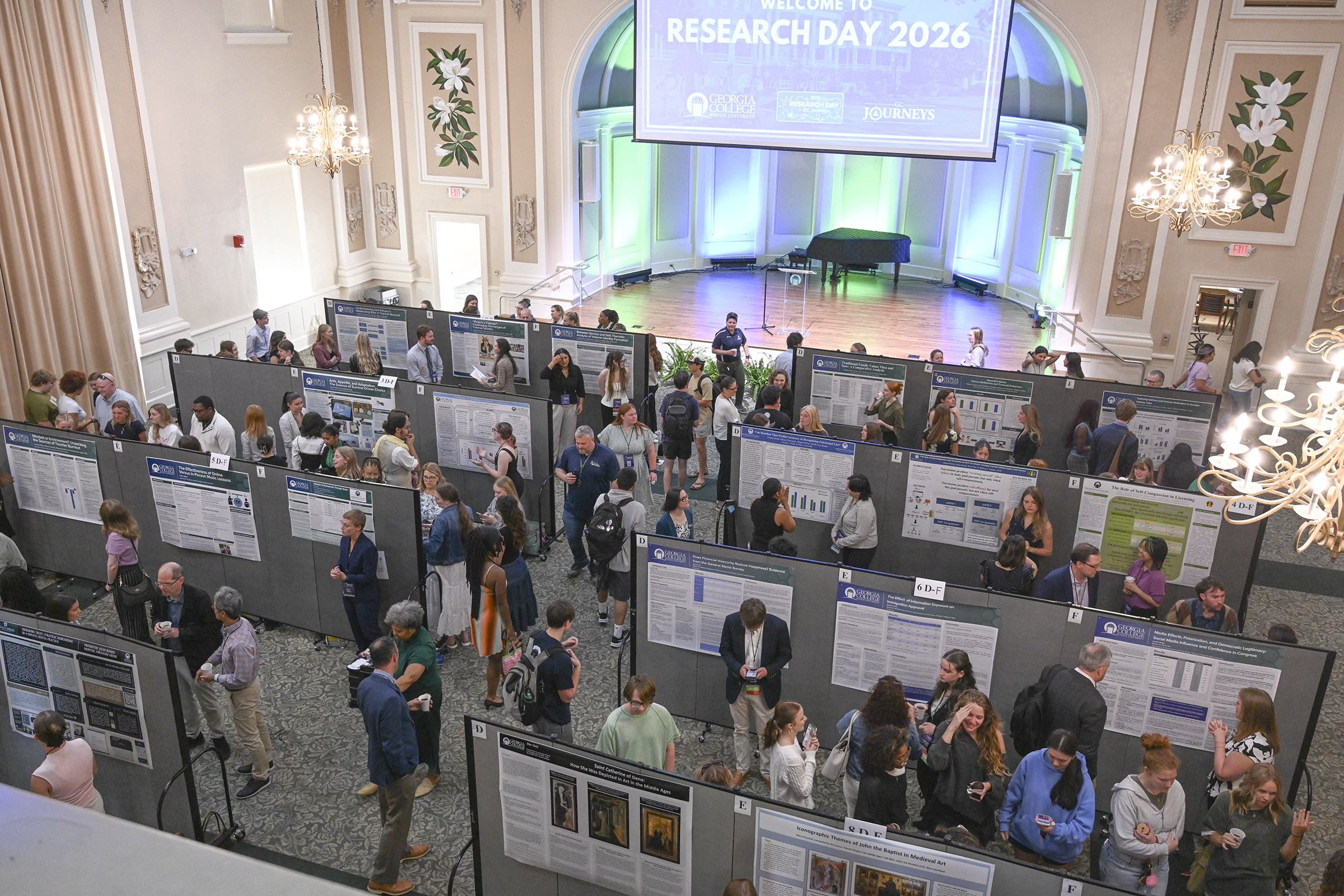
G eorgia College & State University enjoyed another record-year Research Day on April 15.
The campus-wide showcase of faculty-mentored student research saw 283 projects in 2026 – a 12% increase in participation over last year. All disciplines were represented as topics included studying more uses for GLP-1 medication, improving academic outcomes by analyzing online learning platform usage, assessing soil conditions after kudzu removal, celebrating our nation’s musical history and unlocking knowledge about millipedes' genetic adaptations.
The students-turned-scholars put their liberal arts education into action by analyzing data, solving problems and communicating complex ideas clearly through poster and oral presentations.
Of the 283 projects, 250 were completed by undergraduate students, highlighting the university’s commitment to providing transformative learning experiences to students on their way to earning bachelor’s degrees.
“We value undergraduate research so much because it combines many skillsets that transfer to students’ future work and their careers,” said Dr. Tsu-Ming Chiang, GCSU Psychology professor, faculty director of Mentored Undergraduate Research and Creative Endeavors (MURACE) and 2026 CUR Fellow. “Our focus on undergraduate research differentiates us from larger schools that make undergrads the subjects, not the researchers. Here our undergraduates work directly with faculty mentors.”
We value undergraduate research so much because it combines many skillsets that transfer to students’ future work and their careers.
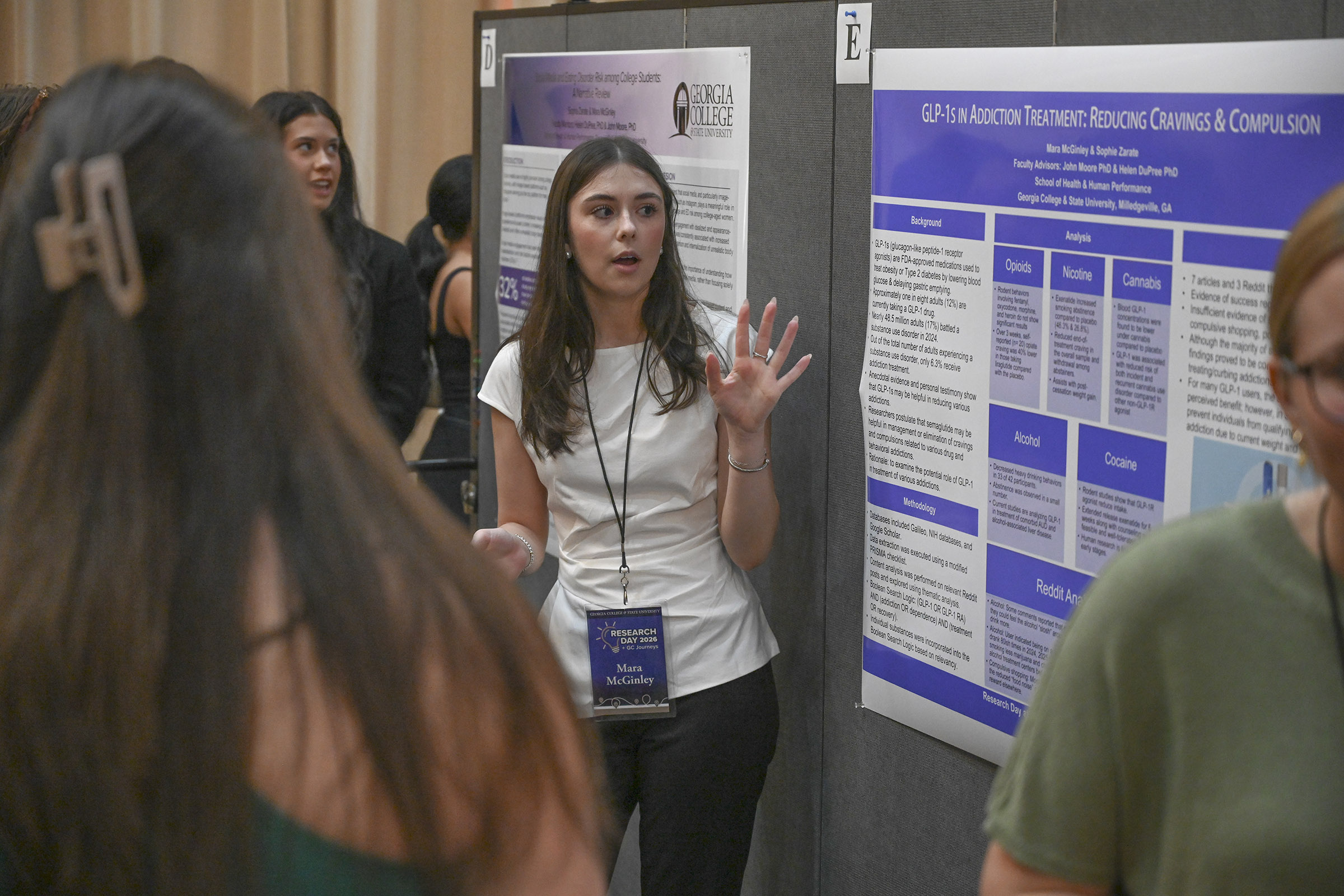
“It’s super special to have the opportunity as an undergrad to do research with my professors and work so closely with them,” said Mara McGinley, a sophomore public health major. “They’ve treated me with such respect. When I told my friend who goes to a large university that I was doing research as a sophomore with my professor, she was astounded.”
McGinley collaborated with assistant professor of public health Dr. John Moore on a study of potential applications of the GLP-1 medication used to curb appetite in managing obesity and type 2 diabetes. McGinley reviewed scholarly articles to determine whether GLP-1s can curb other compulsive behaviors such as gambling and alcoholism. Preliminary data indicates there’s potential to reduce those behaviors, but more clinical trials are needed before more applications are confirmed.
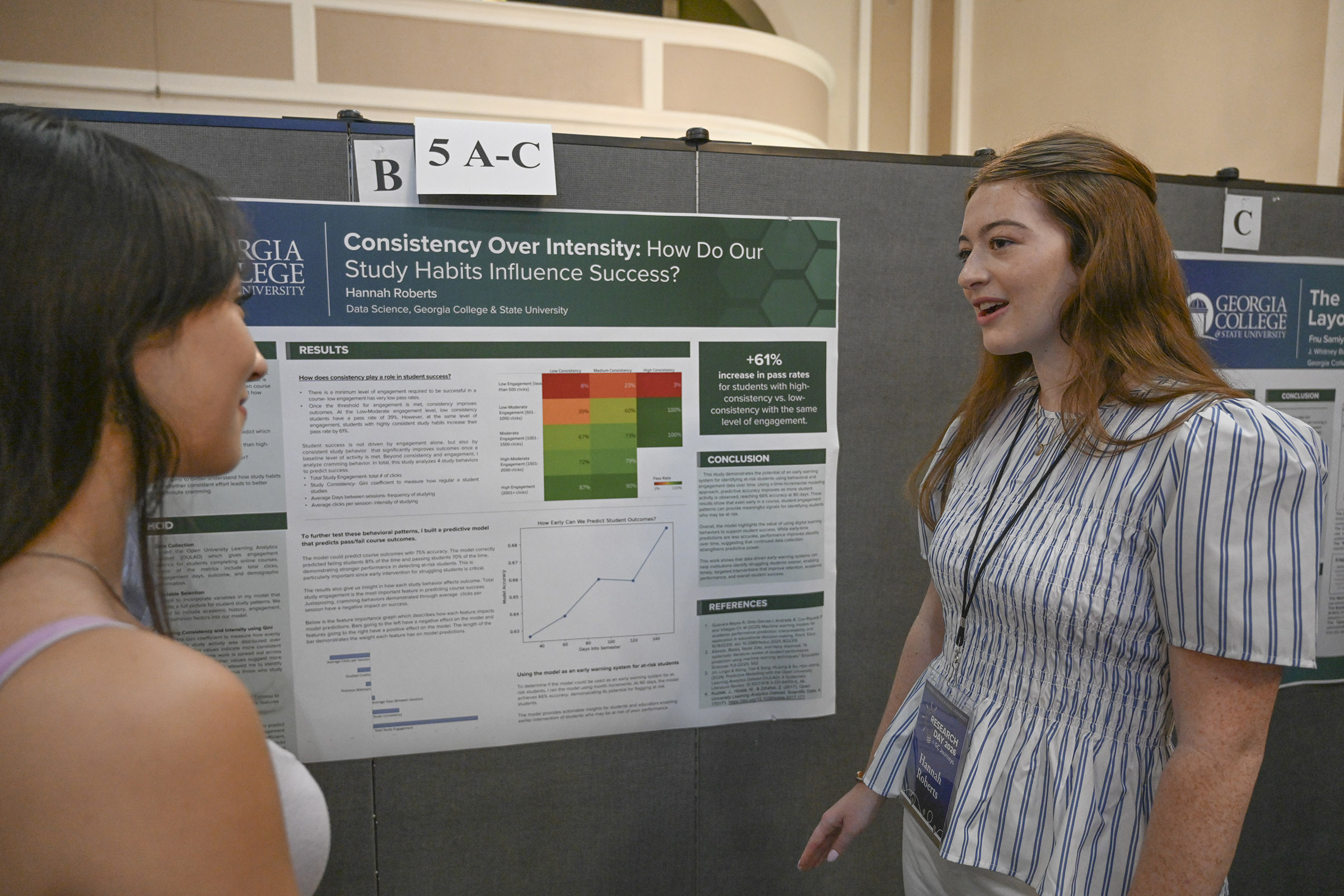
Hannah Roberts, a senior data science major, learned the twists and turns that come with the research process. Her work alongside assistant professor Dr. Daniel Wu, faculty member in the College of Business & Technology, began as a look at studying behavior among students, examining whether cramming or incremental studying was more efficient.
“My model was a success, so I went from analyzing cramming behavior versus spaced studying behavior to seeing if I could predict failure early on, which has a much larger effect for educators and students,” said Roberts.
The ultimate goal was to offer educators a predictive framework for early intervention, allowing for targeted support before a student reaches a critical failure point.
When I told my friend who goes to a large university that I was doing research as a sophomore with my professor, she was astounded.
“Dr. Wu has been a great help throughout this process,” Roberts said. “He has given me guidance since the beginning on how to approach the project and where I can add a little more detail or reframe certain aspects of my research questions. I’ve been working on this research all semester, so being able to share it with my peers and faculty is an amazing experience.”
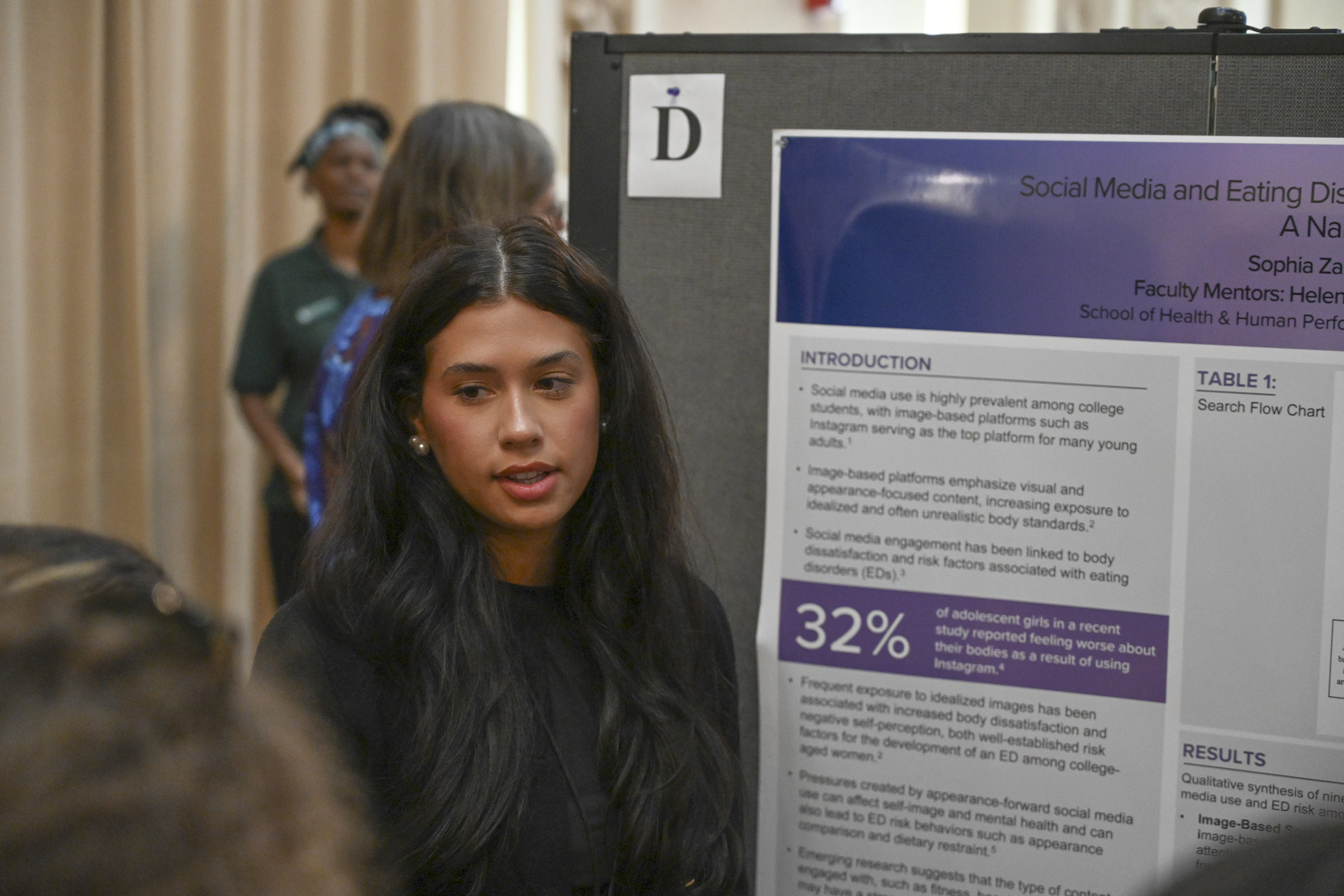
Junior public health major Sophie Zarate took on a project that also has implications for her fellow college students, studying the effects social media use has on body image among young adults.
“There are so many image-based platforms, which can create unrealistic expectations for women,” said Zarate.
With the help of School of Health and Human Performance lecturer Dr. Helen DuPree, Zarate reviewed existing literature to identify common findings, conceptual frameworks and gaps in current research.
“Research Day gives students a chance to stand on their own two feet,” said DuPree. “We can give them every opportunity to investigate a topic and present it to their peers in the classroom, but Research Day really steps that up a good bit.”
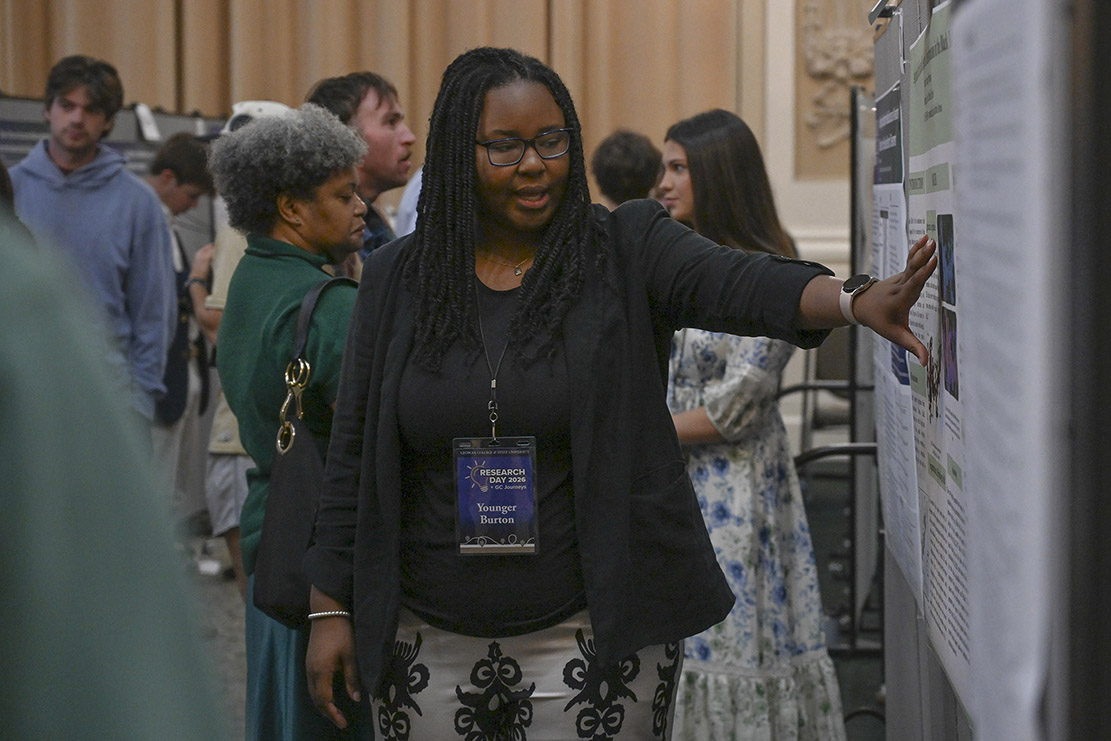
Header Images: Research Day 2026 included 283 original research projects, including student poster presentations. Mara McGinley, Hannah Roberts and Sophie Zarate all presented posters during the morning session in Magnolia Ballroom. Photos by Anna Gay Leavitt.