Tracking a Bloom: GCSU Student's Lake Sinclair Study Earns Award at Georgia Environmental Conference
Tracking a Bloom: GCSU Student's Lake Sinclair Study Earns Award at Georgia Environmental Conference
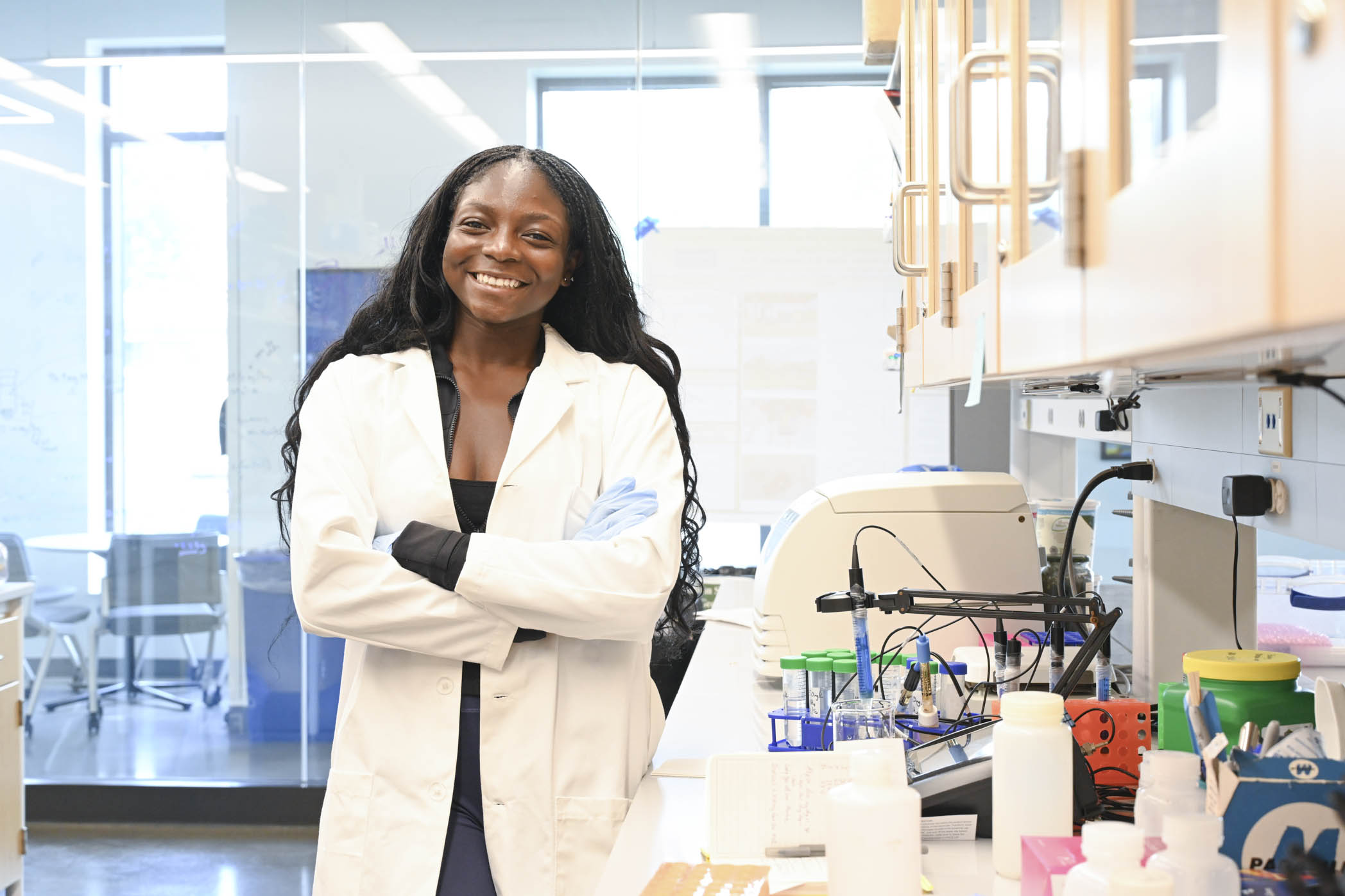
Last month, Josefa Tchamna Kouna, a biology major and recipient of a 2026 Georgia College & State University MURACE Summer Fellowship, presented her summer research at the Georgia Environmental Conference (GEC) on Jekyll Island. The conference is organized by the U.S. EPA, Georgia EPD, Georgia Department of Economic Development, Georgia Power, Georgia DOT, universities, industry associations, and other environmental organizations. To attend, Tchamna Kouna had to apply through a competitive, peer-reviewed process and was selected as a finalist, earning complimentary registration and lodging at the conference.
During the conference, she presented her research both in a formal research session and one-on-one discussions with attendees throughout the event as part of a student competition.
In the end, Tchamna Kouna returned to GCSU with one of the 2026 Student Scholarship Program Awards and a $1,500 cash prize.
Her research tracked water-quality conditions across multiple sites on Lake Sinclair and found strong evidence of a localized algal bloom at one sampling site, where phosphate, chlorophyll-a, cyanobacteria, and turbidity all spiked simultaneously during the study's third week. Statistical analysis confirmed the bloom was isolated to that site rather than reflecting lake-wide conditions, and dissolved oxygen levels there told their own story, staying high during the bloom's peak, then dropping sharply the following week as the algae died off and decomposed. The findings underscore how quickly conditions can shift within a single lake, and why monitoring individual locations matters more than assuming uniform behavior across a whole body of water.
As a research student with GCSU’s Aquatic Sciences Center (ASC), she works closely with Dr. Samuel Mutiti, professor of geology and director of the ASC.
“Her representation of her research, Georgia College & State University, the ASC, and herself was truly outstanding,” said Mutiti. “In fact, she was so impressive that a representative from the state approached her with employment opportunities.”
Her path into research started with a deep interest in the ethnomedicinal compounds of Cameroon. When she mentioned it to Mutiti, he told her about his lab’s research trips to Africa, and she asked to join. He brought her on as a research assistant to one of his graduate students, whose work spanned Zambia and Georgia, an experience Tchamna Kouna says vastly broadened her perspective.
Tchamna Kouna wasn’t an environmental science major, and she recalls feeling like she was missing the foundational knowledge everyone else in the lab already had, but that quickly changed.
“After two days of intensive background research, everything became completely hands-on,” she said, going from “a nervous outsider to someone who could confidently troubleshoot issues, analyze results, and contribute meaningful ideas to our team meetings.” She credits this breakthrough as what allowed her to present confidently at the conference, effortlessly answering complex questions from graduate students and professors alike.
All of this happened, in part, thanks to the MURACE fellowship which gave her a stipend that let her stay on campus and focus on research over the summer. The ASC provided resources, supplies, training, field transportation, and mentorship along the way. Her project also benefited from close collaboration with Kristen Mueller, the ASC’s first GCSU Summer Intern and co-author on the work.
For students who aren’t sure how to get started in research, Tchamna Kouna's advice is simple: don’t count yourself out before you try.
“Professors heavily value the unique perspectives you bring, and people are genuinely ready and willing to help you succeed,” she said. Her suggestion is that if you see research that sparks your interests, just reach out and start a conversation. “You have already done the hard part by getting here. The faculty members and mentors are here to support you; all you have to do now is take that first step and reach out,” she said.
Dr. Mutiti said stories like Tchamna Kouna's are a reminder of what undergraduate research can look like when students get real access to hands-on fieldwork and direct mentorship.
“I believe it’s important that we share stories like these. They remind us of the incredible work happening at GCSU and the meaningful impact we have on our students’ lives,” he said.