Research-ready: Double major studies particle physics through National Science Foundation program
By Gil Pound
G eorgia College & State University physics and mathematics double major Jude Doredant was research-ready when he arrived at the Thomas Jefferson National Accelerator Facility for a Research Experiences for Undergraduates program this summer.
The National Science Foundation’s Research Experiences for Undergraduates (NSF REU) program gives undergraduate students 10 weeks of full-time mentored research, in a field of their choosing, at large research-intensive universities. Students selected are provided a stipend to support them through the REU period.
Doredant was accepted into the Old Dominion University/Jefferson Lab REU program, where he studied physics and saw the lab’s particle accelerator firsthand.
While other REU students in the program had to get acquainted with lab work and conducting research, Doredant was prepared from day one.
“It was challenging for some students to get started with the research process because it was maybe their first time in a lab setting, but I was ready because we get awesome opportunities at GCSU,” he said. “I was able to begin immediately.”
The junior was ready because research is different at Georgia College, where over two-thirds of students conduct undergraduate research – some beginning in their first year on campus.
Learning at the speed of light
Doredant, a native of Eatonton, Georgia, does not identify as a thrill-seeker, but he landed in a thrilling environment for his summer REU.
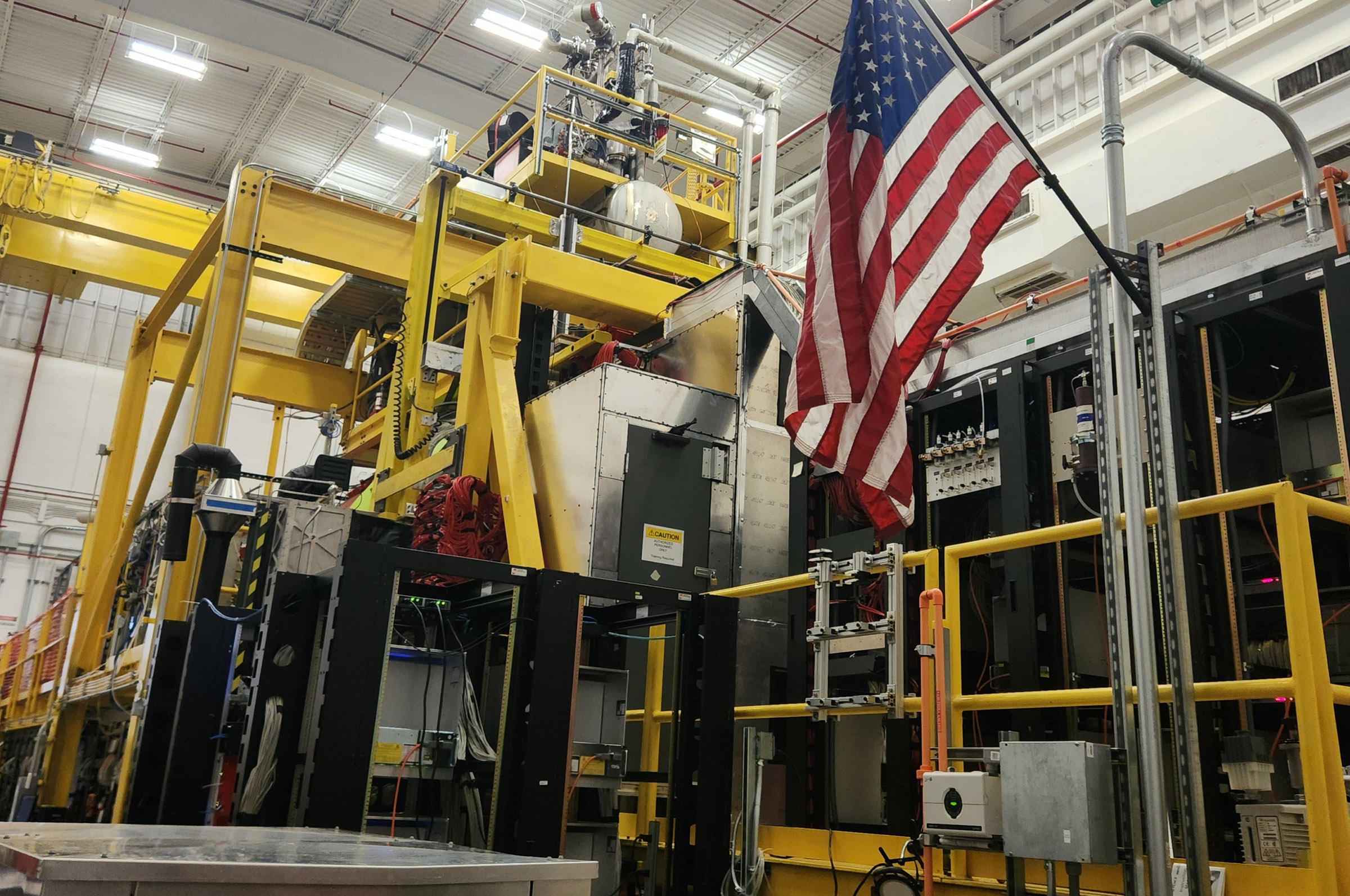
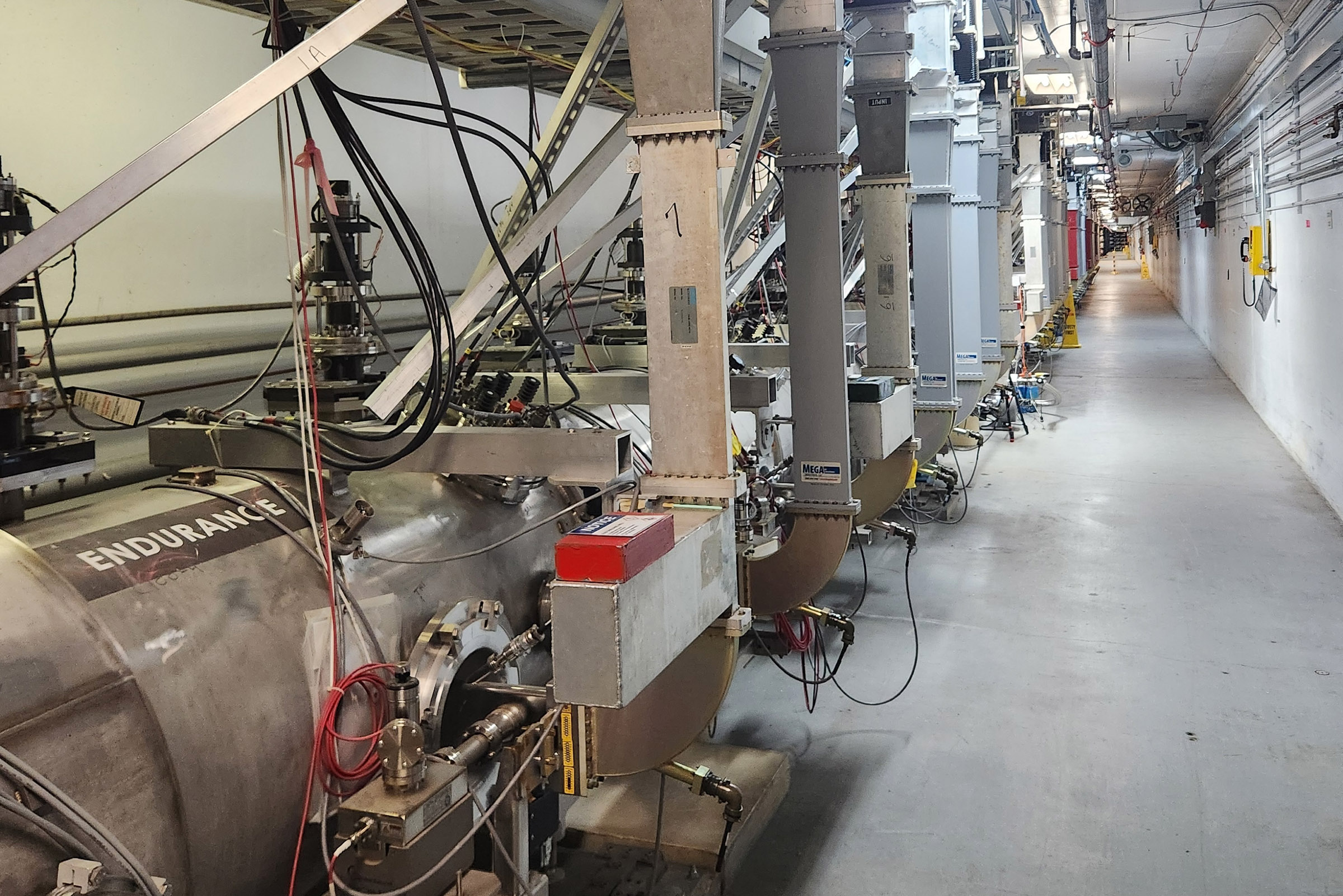
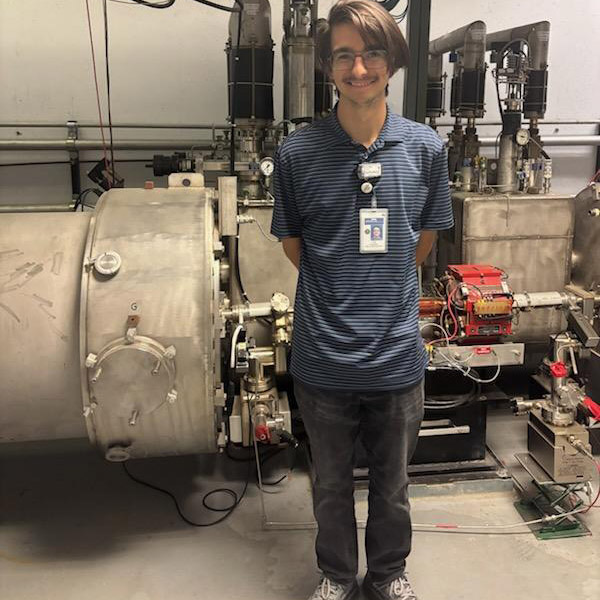
Configured in a racetrack shape about a mile around, Jefferson Lab’s continuous electron beam accelerator facility is the world’s largest installation of superconducting cavities for particle acceleration. The underground particle accelerator uses powerful electric and magnetic fields to speed up charged particles to nearly the speed of light before they crash into a target, or each other. Physicists study the gathered data to better understand the basic building blocks of matter.
Some students there weren’t necessarily ready to jump into the research process, but I was because we get awesome opportunities at GCSU.
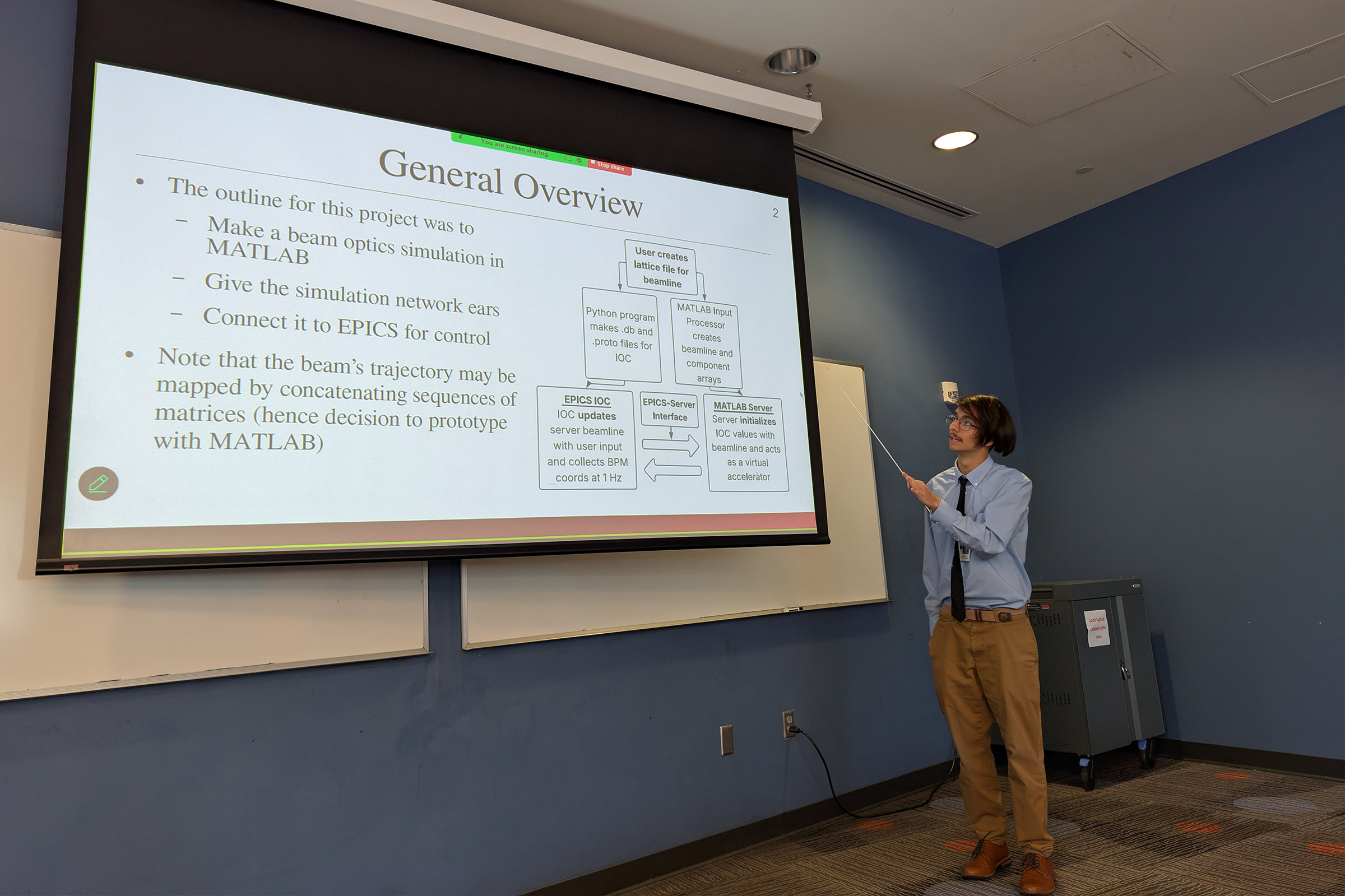
Doredant focused on creating a simulation for the accelerator’s injector, which is how the particles are introduced into the system.
“The interesting part is controlling the simulation with the same EPICS (Experimental Physics and Industrial Control System) software they use on the rest of the facility,” said Doredant. “You really learn how the accelerator functions.”
The work was not only useful to the aspiring physicist, but to Jefferson Lab as well. Doredant’s REU mentor, Dr. Volker Ziemann, said the simulation could be used as a tool to train accelerator operators.
But scientists do not just work in a lab, they publish their findings to the wider scientific community. Doredant was able to experience that as well by detailing his REU work in an article for submission to a journal and the Jefferson Lab archives.
Add in some valuable networking with possible future colleagues, the REU checked all the boxes for the Bobcat.
“I met so many students in my field and made a bunch of friends,” said Doredant. “I presented in front of professors and a crowd of physicists. It was an inspiring, life-changing experience. I’ve been telling everybody I can that they have to do an REU. It made me feel like I could really be a scientist and contribute to society.”
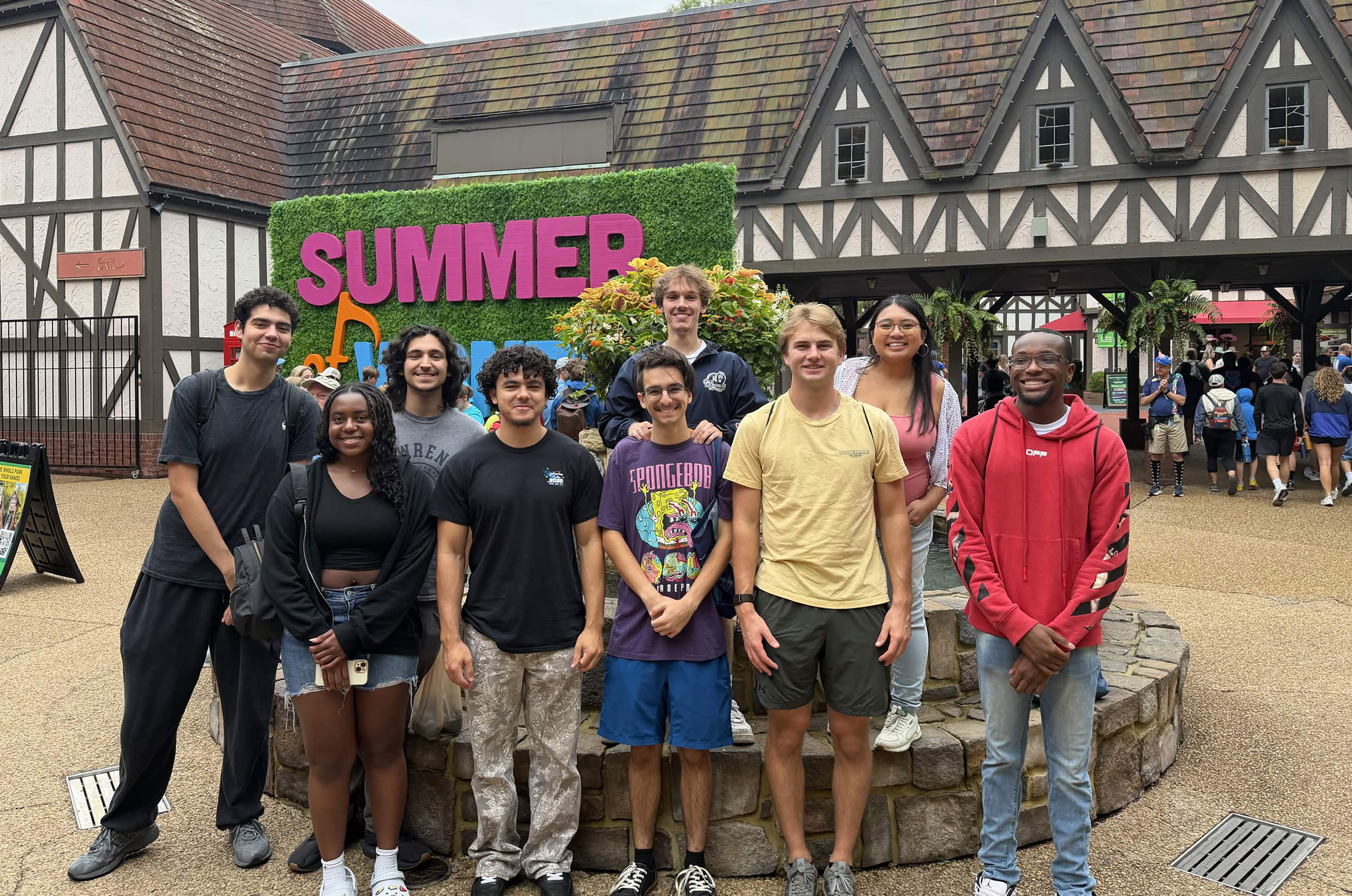
Header Images: Doredant presenting his work. The particle accelerator at Jefferson Lab. Doredant with his fellow REU students at a Virginia theme park. (Photos: Jude Doredant)