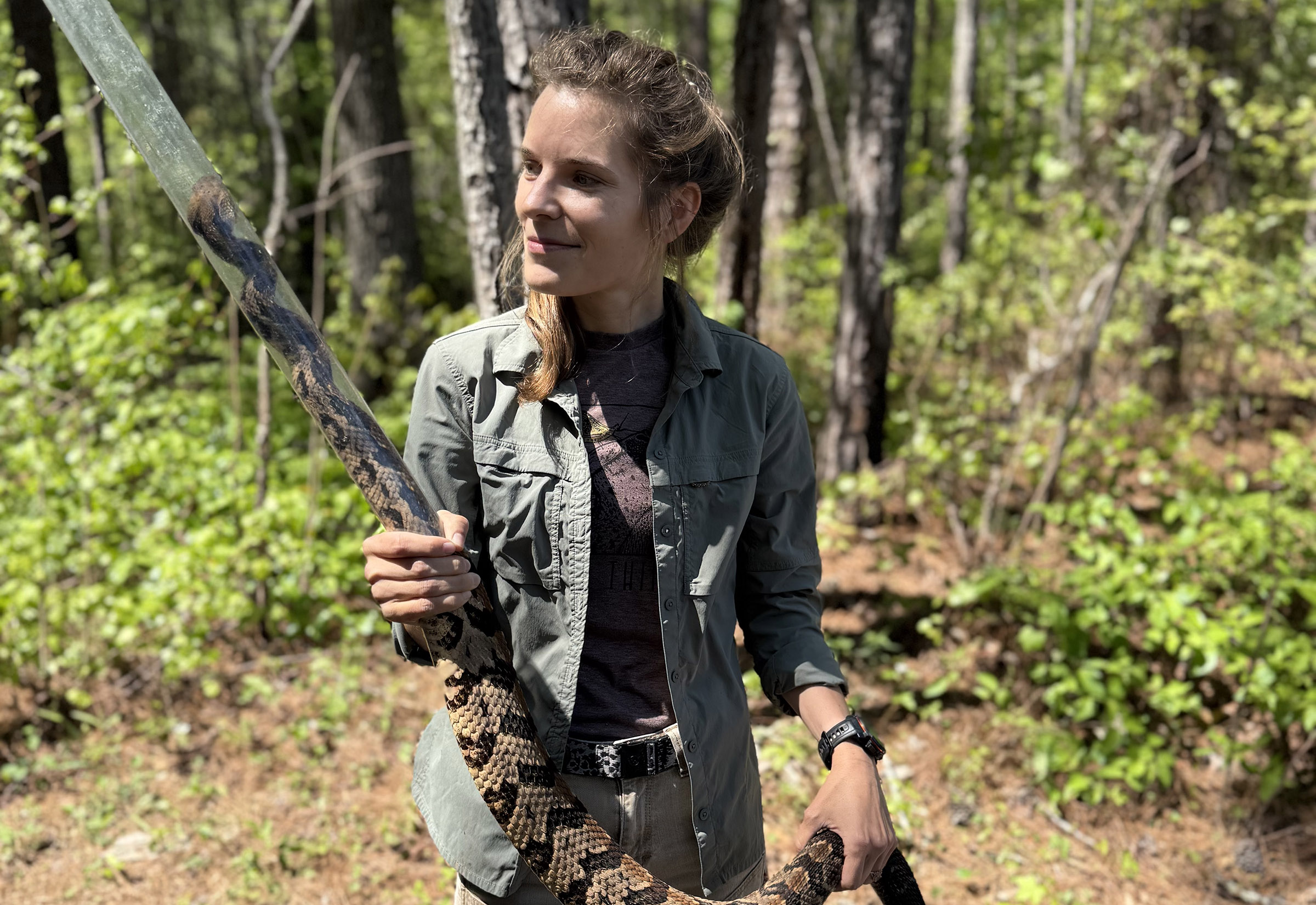
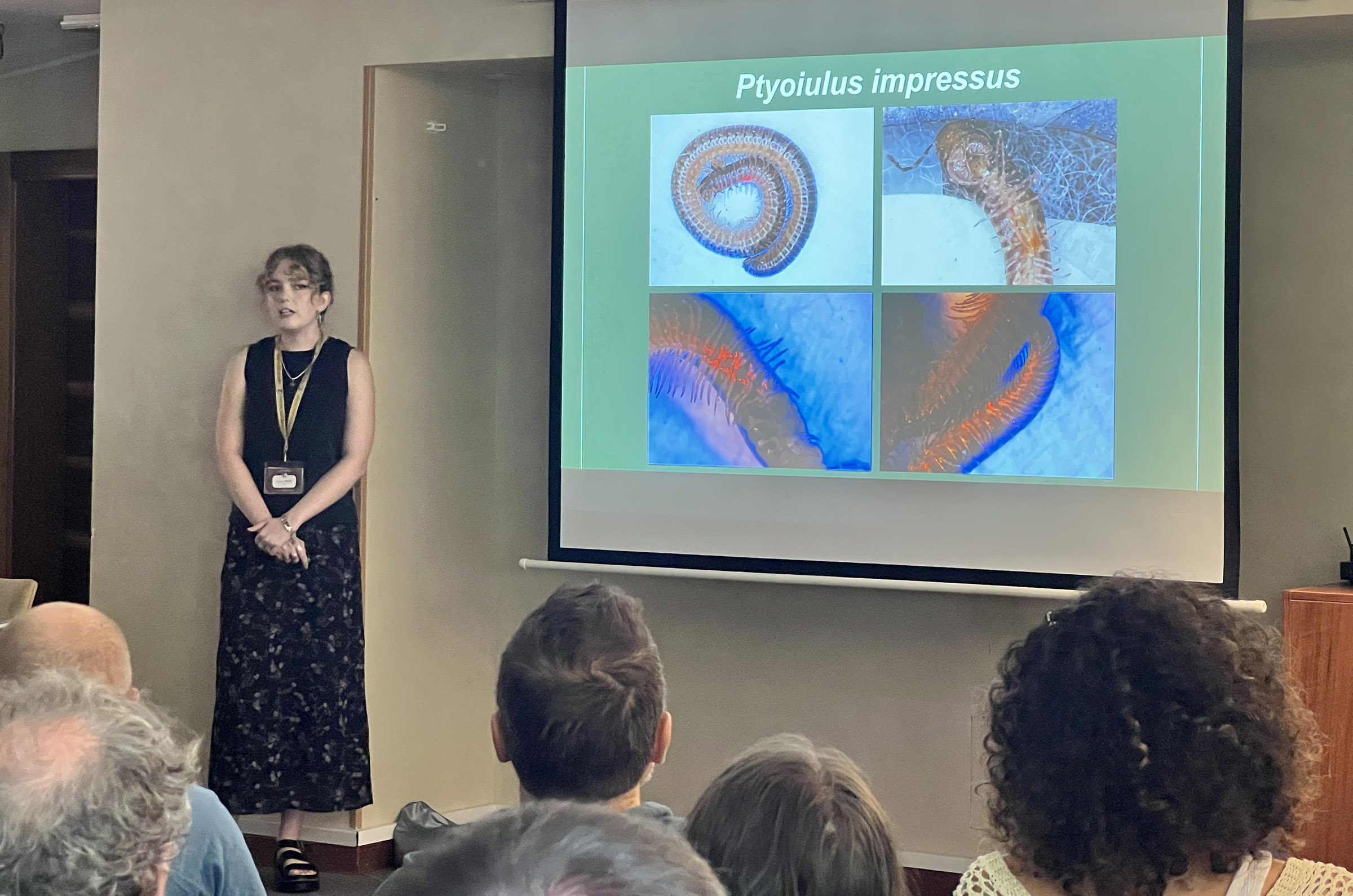
GCSU grads receive National Science Foundation recognition through Graduate Research Fellowship
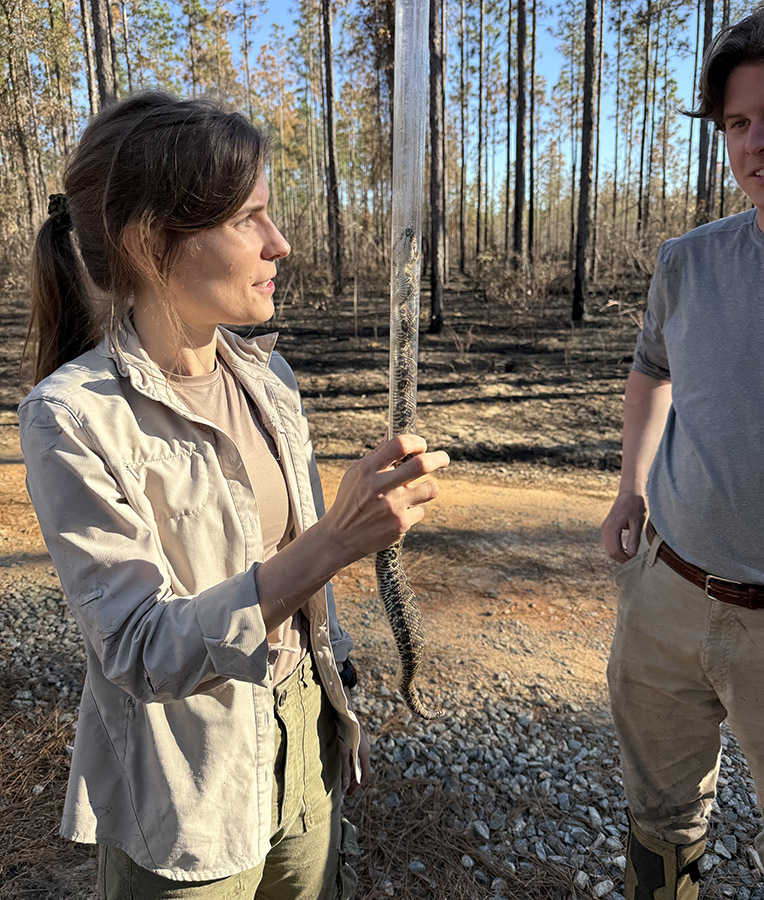
By Ian Wesselhoff
T wo Georgia College & State University students have been recognized by the U.S. National Science Foundation through the NSF Graduate Research Fellowship Program, which is awarded to graduate students who demonstrate potential for significant achievements in research. Out of 14,000 applicants nationwide, Amber Stubbs (’24, ‘26) was one of just 2,500 to win the award, and Sydney Irons (’25) was one of 1,470 honorable mentions.
Stubbs graduated with her master’s in biology from GCSU in May, and she will begin her Ph.D. studying rattlesnake behavior at San Diego State University in the fall. She says biology department faculty at Georgia College, especially her mentor Dr. Dominic DeSantis, pushed her to chase her passion in a way she never imagined.
“I had no aspirations for a Ph.D. – not because I didn’t want it, but I didn’t think I’d be able to. It really just sounded like a ‘pie in the sky’ kind of thing,” Stubbs said. “It took a lot of people saying it over and over for me to be like, ‘I guess if you really think it could happen,’ and now I’m like, I couldn’t live without that being the path.”
DeSantis won the NSF Graduate Research Fellowship himself when he was a graduate student, and he encourages the aspiring grad students in his lab to submit their own proposals as an opportunity to practice grant writing. Upon learning she had earned the fellowship, Stubbs says it took her 30 minutes to stop shaking.
“I could not, would never have pursued this without them. In my wildest dreams,” Stubbs said. “If I hadn’t have joined this lab, I have no idea where I’d be.”
Moving from middle Georgia to California for her Ph.D. program looked challenging financially, and Stubbs’ nightmare was that funding for her project would fall through, but support from NSF means she can now feel at ease.
The NSF Graduate Research Fellowship Program provides three years of financial support for graduate students over a five-year fellowship period, with a $37,000 stipend and $16,000 cost of education allowance payment for each of the three years of support.
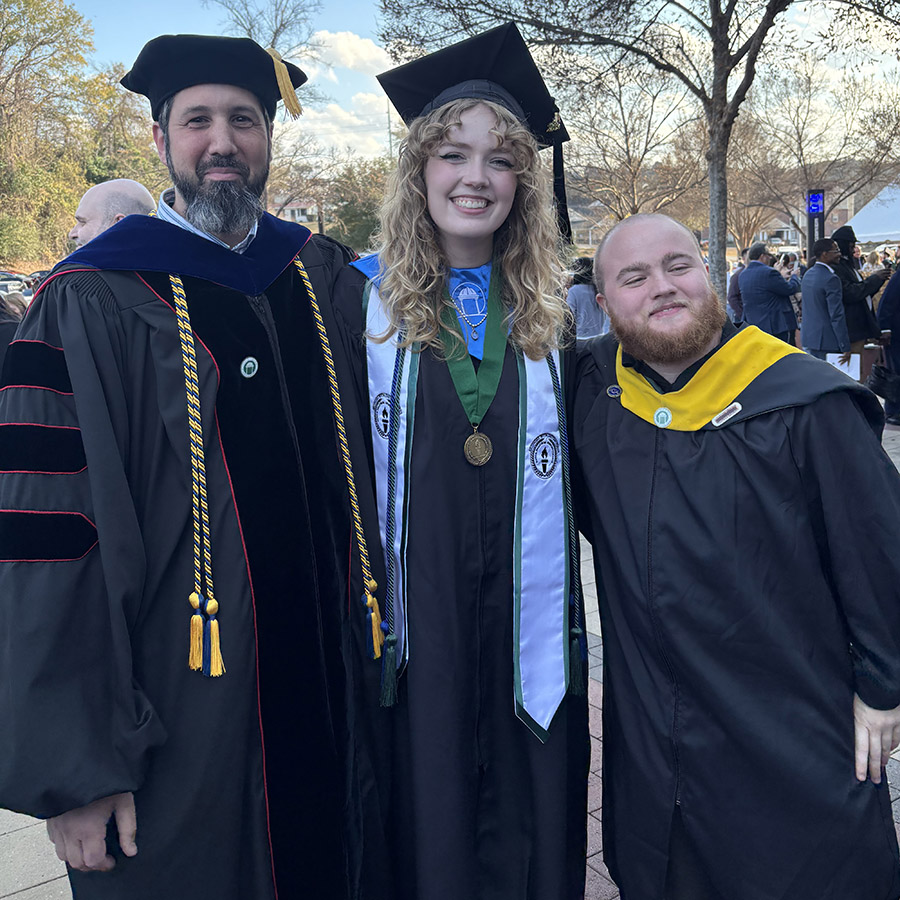
Irons, an environmental science major, will start her Ph.D. at the University of Texas at El Paso in the fall. At Georgia College, her research was focused on using fluorescent powder as a method for marking millipedes, and she was recently accepted for publication in Biologia Serbica following her presentation at the International Congress of Myriapodology in Serbia last July. At UTEP, she will be looking at the impact of artificial light on pollinator insect communities.
Irons’ status as an honorable mention is not only great for her CV, but also gives her a better chance of earning the full fellowship in the future – and she is already working on her application for next fall. She says that taking advantage of the opportunities at GCSU opened doors for her future.
“The opportunity to participate in undergrad research – that really helped me so much. Because I’m going from being an undergrad to being a Ph.D. student,” Irons said. “I’m skipping the master’s altogether because I have the research experience. I’ve already done it. I’ve written the paper, I’ve done the research, I’ve collected the data, I know it. Like, I’m good. I don’t need the master’s degree to show me how to do that.”
Irons presented at several conferences alongside master’s students and landed multiple jobs with the Georgia Department of Natural Resources as an undergraduate, and she says those would not have been possible without her experience at Georgia College.
“Really, this environment has prepped me better than I feel like other school environments would’ve,” Irons said. “I know other undergraduates at various other schools, and I was like, ‘Oh yeah, I do research. I’ve been to these and these conferences,’ and they’re like, ‘What? I don’t even have that chance. I don’t even have that opportunity to do that.’ I’m like, ‘Well, you should have come here.’”
The opportunity to participate in undergrad research – that really helped me so much. Because I’m going from being an undergrad to being a Ph.D. student. I’m skipping the master’s altogether because I have the research experience.
Header Images: Amber Stubbs works with a timber rattlesnake in the field. Sydney Irons presents at the International Congress of Myriapodology in Serbia last July. (Photos: Amber Stubbs and Sydney Irons)