GCSU archivists: Keep a critical eye on AI-generated social media content
By Gil Pound
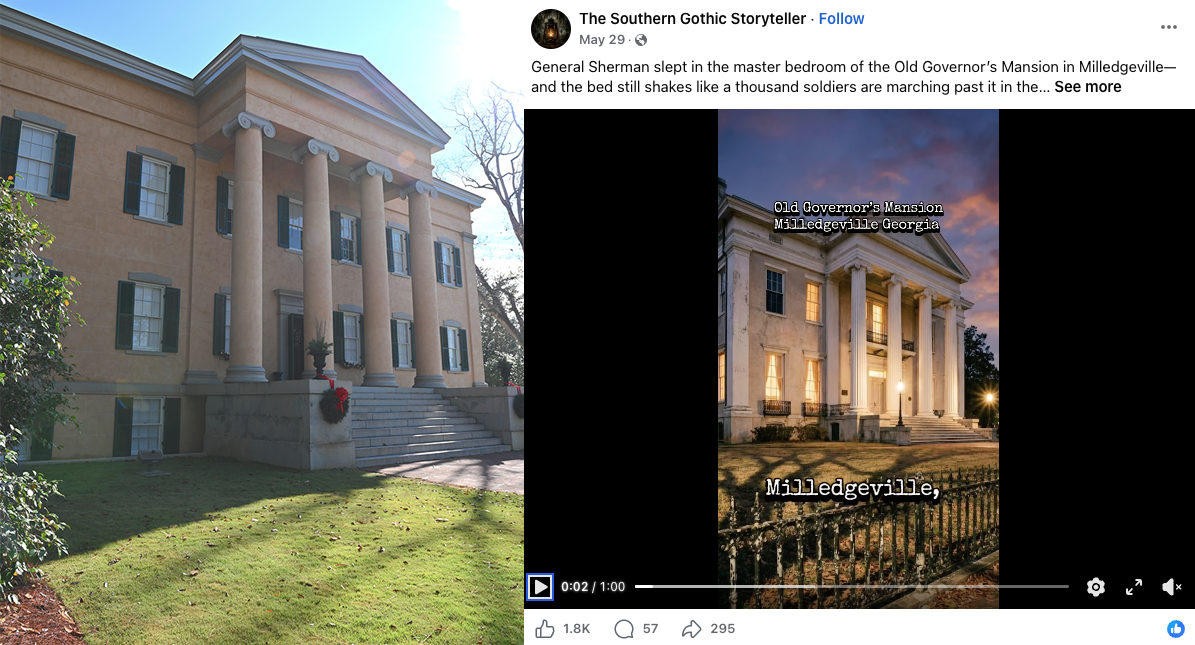
A t least one generative AI social media account would have people believing the master bed inside Georgia’s Old Governor’s Mansion hauntingly “shakes like a thousand soldiers are marching past in the dark.”
Rest assured the home to eight Georgia governors throughout the mid-19th century – now a historic house museum, fully restored and stewarded by Georgia College & State University – sits on solid ground and Mansion staff report no unexplained noises or ominous sightings.
The only ghost in this AI-aggregated story is the truth, as historical narrative-spinning social media profiles seek to drum up engagement with little to no regard for accuracy.
Such accounts were a topic of conversation at Georgia College’s AI in the Liberal Arts speaker series, featuring Ina Dillard Russell Library faculty on Nov. 4. As artificial intelligence creeps into myriad aspects of everyday life, this series produced by the School of Continuing and Professional Studies puts Georgia College faculty, staff and students at the forefront to contribute to the evolving understanding and application of AI across disciplines. The next event is slated for Nov. 12 when Department of Art Chair Matthew Forrest discusses “AI in the Creative Fields: The Past, Present and Unknown Future.”
A History Heist
While AI has advanced a long way since becoming widely available four years ago, the history handlers at Russell Library say the emerging technology still has a long way to go. They pointed to several AI-generated posts on history-focused social media channels that have produced incorrect dates, names and locations in distilled and distorted content that sometimes goes viral. Some posts craft likenesses of their human subjects that do not at all resemble the very real person represented. GCSU Archivist and Assistant Professor of Library Science Evan Leavitt calls it a “visual flattening of history.”
“Those errors matter because as that post circulates, the information gets included into more AI-generated summaries and even educational material,” said Leavitt. “Historical accounts can acquire more authority through that repetition, so that’s extremely problematic – even more so when the original source exists.”
Generative AI posts encouraging users to hit the share button compound the problem. The stated reason for the share is to help make unknown history more widely known. The real reason is dollar driven.
“Something I think a lot of people don’t recognize about these sites is that it’s monetized content,” said Dr. Shaundra Walker, dean of the University Library. “That’s why you’re being encouraged to share it – not because these people necessarily really care about history, but the more it’s reposted, the more money the content makes them. What you’re doing is helping them run their engagement up.”
So what should social media users do when they encounter questionably accurate content?
“The very first thing is to pause and think, ‘Does this sound right?’ So many people just assume it is right and don’t even get to that step,” said Holly Croft, associate director for special collections and galleries. “If there’s any kind of question in your brain, then the next step is to go look somewhere you know you will find good information.”
Using AI Powers for Good
The archivists say there are some ways AI can be used to aid in their discipline. Tools such as Otter.ai can significantly shorten the time it takes to transcribe an hours-long oral history. Other AI applications can optimize workflow management, creating more time for the human hands to sort and document history.
“It’s somebody doing something that is done ethically and with care,” Croft said. “That is all the difference in the world … There is a way to use this in a way that still centers people. That’s where we want it to stay.”
The AI content strategy runs counter to projects carried out by Russell Library, like the “Documenting African American Milledgeville” exhibit funded by a National Endowment for the Humanities grant. The human-centered heritage project asked members of the Milledgeville community to bring in artifacts that inform on local history. Participants could then have those pieces preserved through digitization, and if they gave their consent, included in an exhibit highlighting local culture.
AI at GCSU
Through events like the AI in the Liberal Arts Speaker Series, Georgia College continues to lead the way in determining how best to use AI to enhance teaching, learning and discovery while preparing students to responsibly navigate and shape an AI-driven future.
The university also launched a 100% online Master of Science in AI Strategy degree earlier this year in addition to offering Master of Management Information System graduate certificates in Analytics & Machine Learning, Enterprise Systems & AI, and Generative AI & Systems Development.
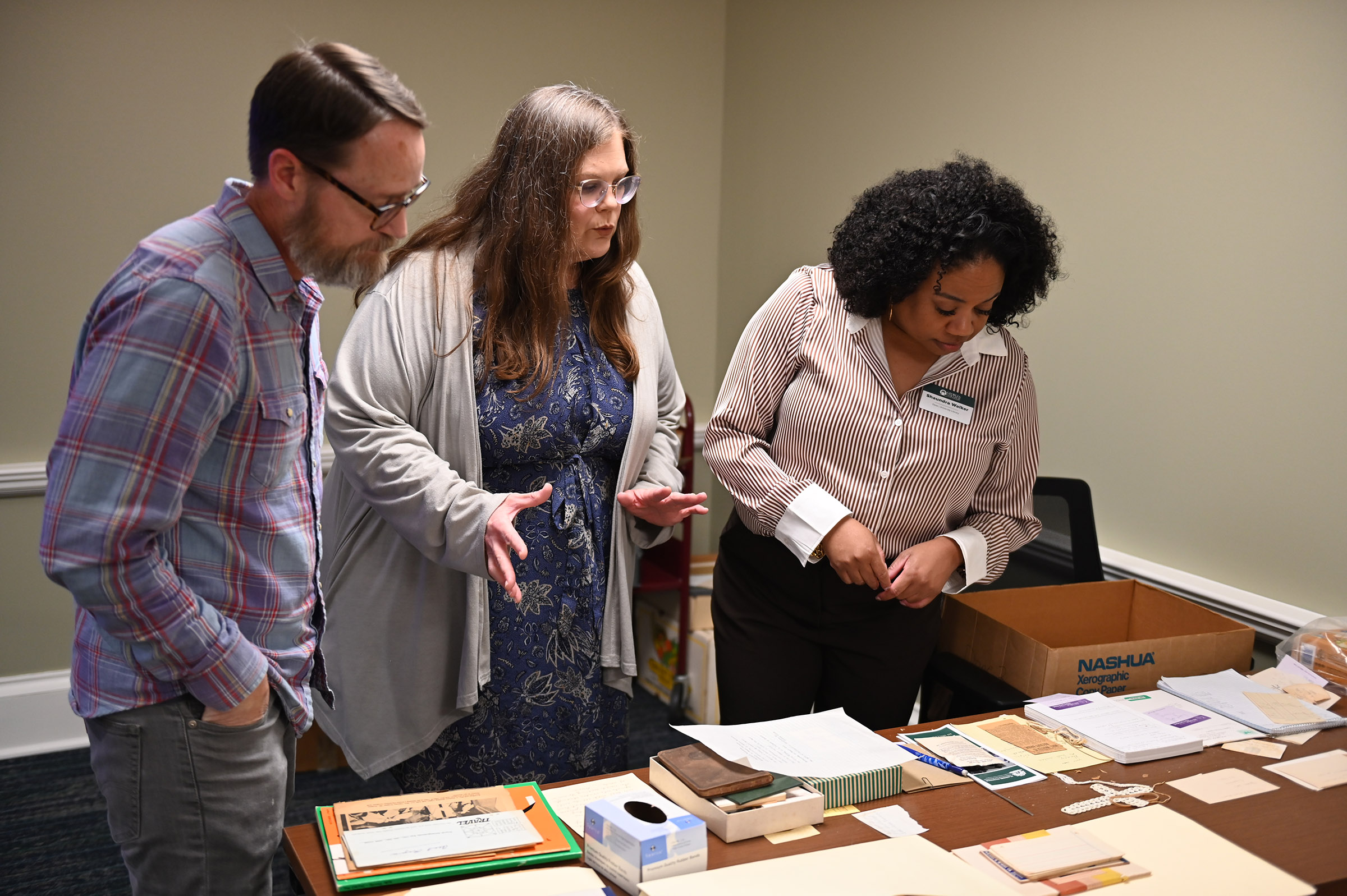
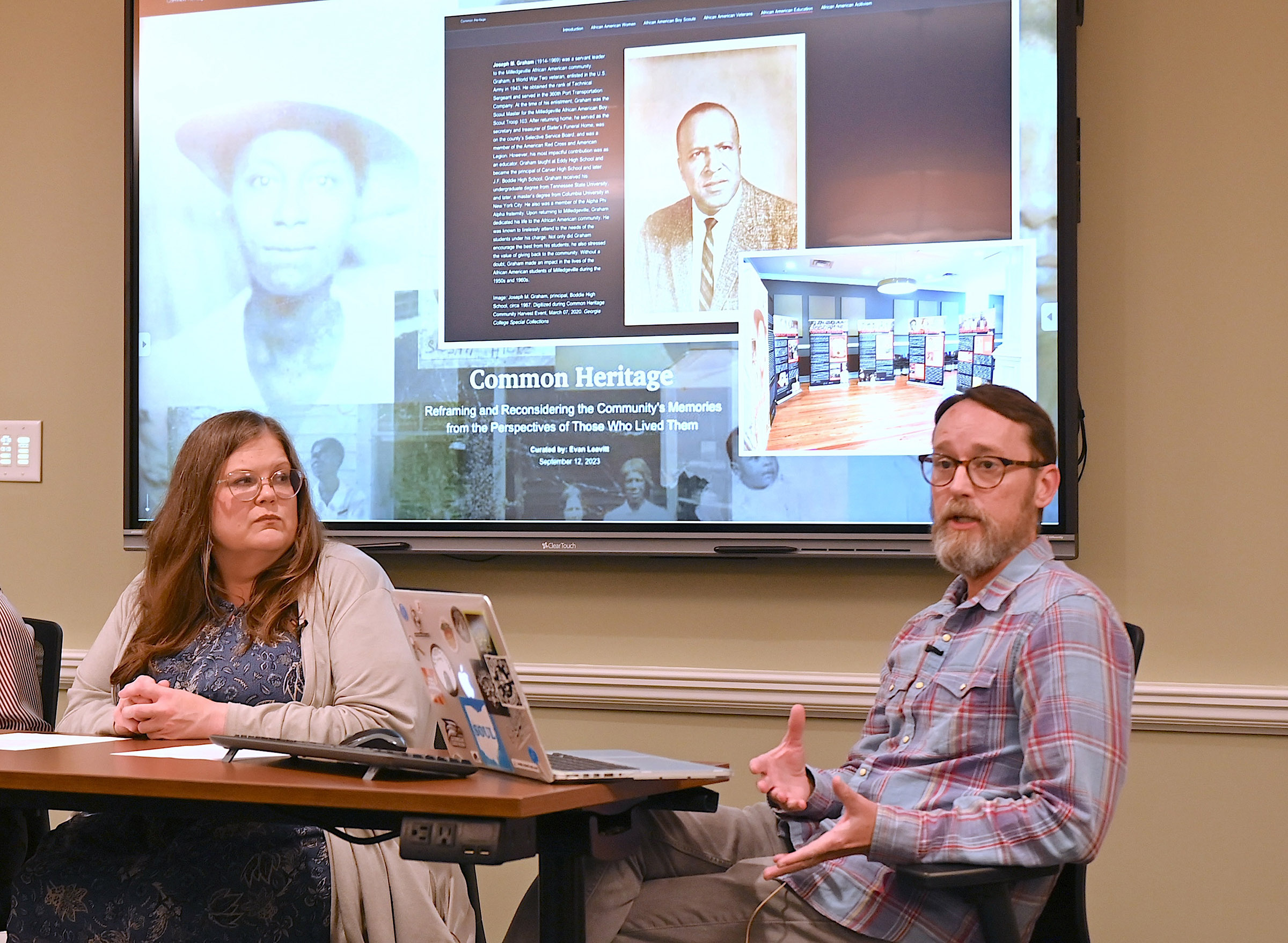
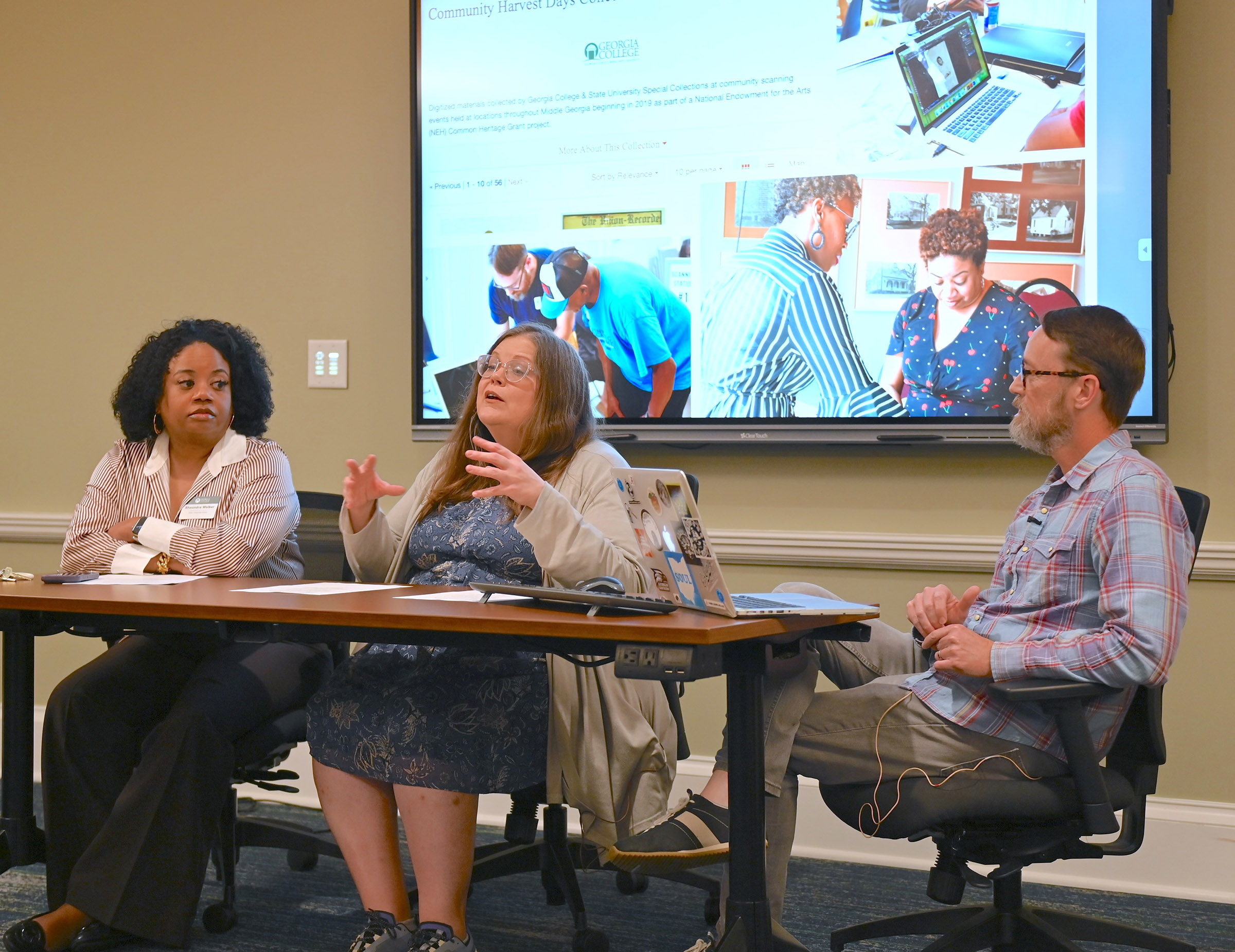
Header Images: Library faculty discuss the challenges posed by AI-generated historical content on social media during the AI in the Liberal Arts speaker series.’ Seated panel, from left: Dr. Shaundra Walker, Dr. Holley Croft, Prof. Evan Leavitt. (Photos: Gil Pound)