‘Best Colleges’ rankings overlook the value of smaller, regional universities
Georgia College & State University President Cathy Cox explores what annual college rankings can — and cannot — measure, specifically as it relates to the unique advantages found at smaller institutions, in a guest essay originally published in the Atlanta Journal-Constitution and provided below.
By Cathy Cox
R anking season in higher education can lead many to believe that bigger is better.
This week, U.S. News & World Report released its 2027 Best Colleges list, and much of the media attention, as is often the case, went to familiar names: Ivy League institutions, major research universities and nationally recognized brands.
Given their scale and cultural reach, that attention makes sense. Ranking lists serve as accountability tools.
The methodology itself, however, offers a useful reminder of what rankings can, and cannot, measure.
Student outcomes, graduation and retention rates, financial resources and investment in faculty all matter. But 20% of an institution’s overall score still comes from peer assessment: the perceptions of leaders at other universities.
Reputation has value. It can also reinforce what the public already believes about familiar brands.
What rankings have more difficulty capturing is students’ lived experiences: Do professors know their names? Are research opportunities accessible to them? Is the institution specifically addressing the needs of its home state?
U.S. News separates and ranks institutions by mission, but public discussion treats the National Universities list as though it were the only ranking that matters.
“National” universities — generally research-intensive institutions with significant doctoral education — are newsworthy, to be sure. Their size and reach command attention.
“Regional” universities in Georgia, however — generally smaller colleges and universities with fewer Ph.D. programs — offer something different.
At Georgia College & State University, where I serve as president, that mission centers on teaching and serving Georgians.
This fall, Georgians made up 95% of our record 1,850-student incoming class, selected from a largest-ever pool of 10,060 applicants. Overall enrollment reached an all-time high of nearly 7,500 students.
When public discourse is dominated by institutions enrolling 35,000 to 57,000 students — campuses that are larger than many Georgia cities — smaller universities like GCSU can easily be overlooked.
But that smaller scale is a strength.
With 75% of our courses enrolling fewer than 30 students, GCSU is structured around discussion-based classes, close faculty mentorship and hands-on learning. Although large universities offer extraordinary opportunities of their own, first- and second-year courses there can place hundreds of students in auditorium classrooms, and undergraduates often play second fiddle to graduate students for faculty mentorship and research positions.
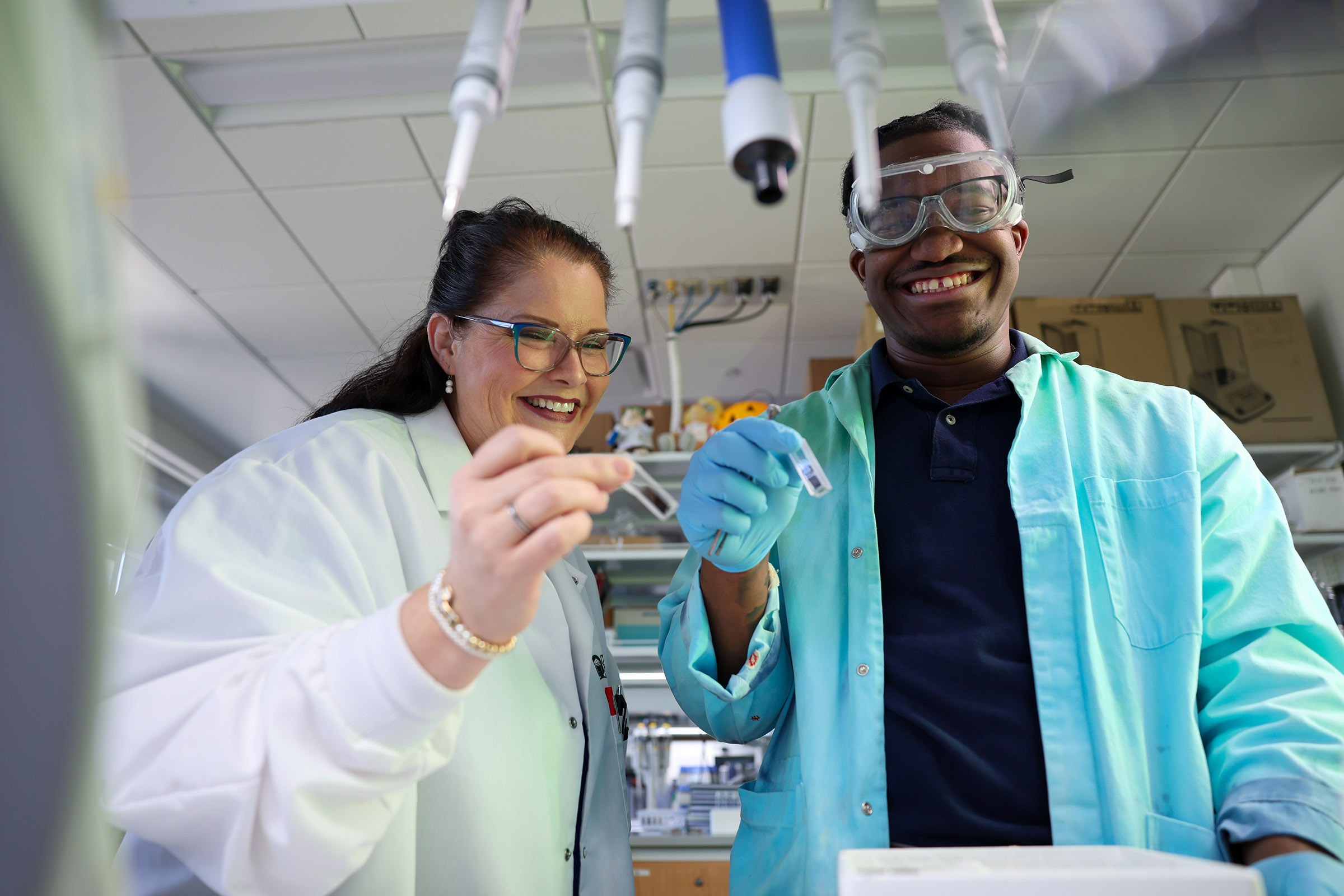
That was exactly senior Dakota Warren’s experience.
After his junior year, he transferred to GCSU from a much larger state school to pursue laboratory research. Now a senior chemistry major, he says he accomplished more in his one year at Georgia College than he did in three years at his other school.
“It’s actually crazy. I had no idea I would do this much,” Warren said. “Just by me being at Georgia College, I’ve gotten a lot of opportunities for different things, like my internship, doing research and having my own initiative. I feel like that’s been so much more than I could do at my previous school.”
At GCSU, opportunities like Warren’s are designed to be part of an undergraduate’s experience, rather than reserved for post-grads.
Smaller regional universities can also be especially responsive to state needs and student demand.
For example, the Lettie Pate Whitehead Foundation Nursing Scholar Program at GCSU has provided 32 full scholarships since 2022 to help address the state’s nursing shortage. GCSU’s Simulation and Translational Research Center provides more than 27,000 contact hours annually, giving nursing students extensive hands-on preparation for clinical practice. And the personal guidance offered by the Georgia College Pre-Med Mentorship Program has enabled participating students applying to medical school to earn a 100% acceptance rate for the past 16 years.
The unique advantages found at smaller-scale universities are reflected in the rankings — but you won’t find them on the National Universities list.
Instead, filter to the Regional list, then look within Georgia. That’s where you’ll find GCSU ranked No. 1 in Best Value for In-State Students, and No. 1 in Best Value Public Schools.
This year, Georgia College also rose to No. 4 among all public universities in the 12-state South — the highest ranking in our 137-year history.
Georgia needs its nationally recognized research universities. It also needs institutions where students receive close faculty mentorship, communities gain targeted workforce solutions and public investment benefits the state.
That work may appear on a regional list, but its impact is statewide.
When it comes to rankings, “Regional” is a classification — not a measure of significance.
--
Cathy Cox is the president of Georgia College & State University and a former two-term Georgia Secretary of State.
Header Image: Senior chemistry major Dakota Warren (right) transferred to GCSU after three years at a larger state school to gain more hands-on learning opportunities. He is pictured here with Dr. Catrena Lisse, who mentored the research group he is a part of that recently traveled to Portugal to present work at an international conference. (Photo: Stacey Lumley)